Portugal's Pavilion at the 61st Venice Biennale Opens With Alexandre Estrela's RedSkyFalls — A Real-Time Installation Wired to Global Seismic Activity Above Magnitude 4.5, in a Biennale Reshaped by the Russia-Israel Boycott
Portugal's pavilion at the 61st Venice Art Biennale opened on Friday with Alexandre Estrela's RedSkyFalls — an installation at Palazzo Fondaco Marcello wired to global seismic activity above magnitude 4.5. The Biennale opens to the public on Saturday under a Russia-Israel boycott controversy.
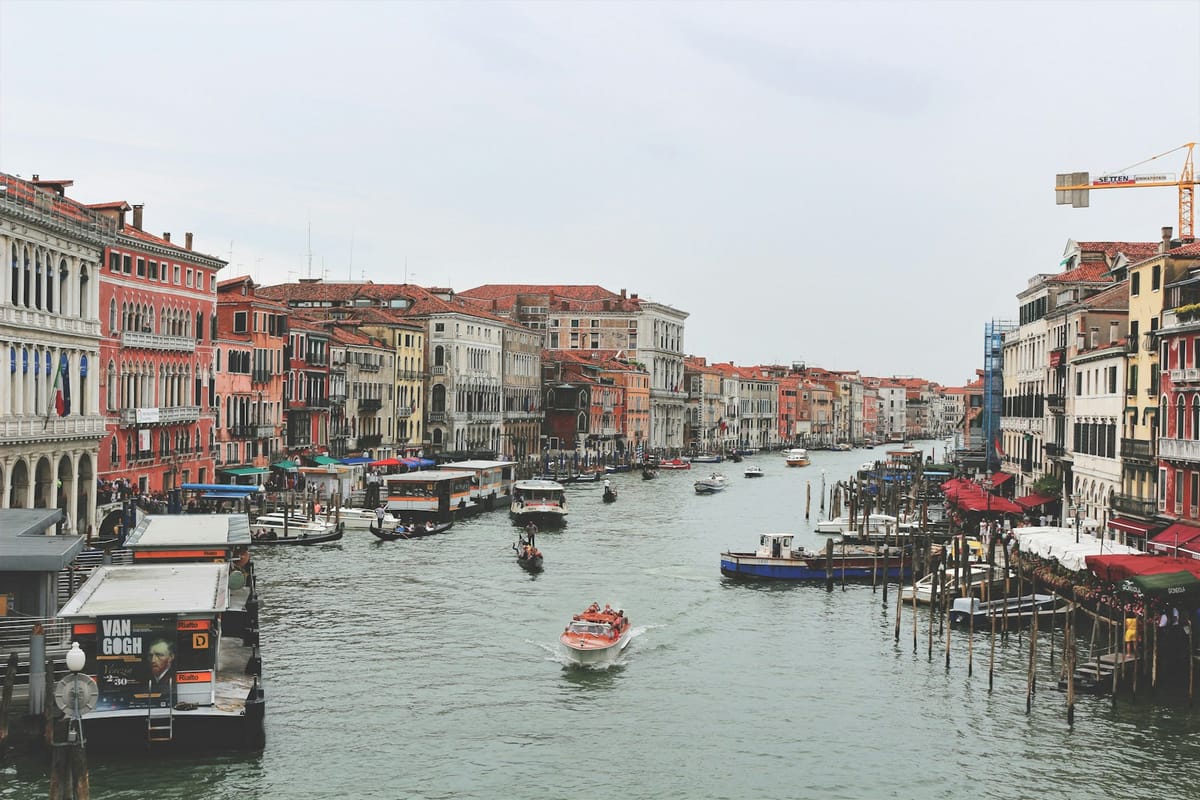
The Pavilion of Portugal at the 61st International Art Exhibition of the Venice Biennale was inaugurated on Friday between 11:00 and 14:00 with Alexandre Estrela's installation RedSkyFalls, mounted at Palazzo Fondaco Marcello in the historic centre of Venice. Culture, Youth and Sport Minister Margarida Balseiro Lopes attended the opening alongside Américo Rodrigues, director of the Direção-Geral das Artes (DGArtes), the body responsible for the commissariat. The Biennale opens to the public on Saturday and runs until 22 November.
What the work does
Curated by Ana Baliza and Ricardo Nicolau, RedSkyFalls is described in the official communiqué as "an artificial ecosystem that responds in real time to global seismic activity, near and distant, with animal sensitivity". The installation reactivates the historical practice of reading earthquakes through animal behaviour — a tradition with deep roots in the inquérito pombalino that followed the 1755 Lisbon earthquake. Whenever a seismic event registers anywhere in the world above magnitude 4.5 on the Richter scale, the installation breaks: a sonic rupture sounds, the landscape inside RedSkyFalls accelerates through the seasons, the plants agitate, and the bio-sentinels — the réplicas — freeze in fear.
The networked dimension
The installation is not a single object in Venice. The press materials describe it as part of a network of Réplicas linking San Francisco, Los Angeles, Lima, Mexico City and Lisbon — geographies on active seismic faults — that respond synchronously to global seismic activity. The Biennale piece extends that network into the Italian context, anchoring a chain of seismic listening posts in cities defined by their earthquake history. The 1755 reference is not decorative; it is the lineage the curators identify as the cultural infrastructure of the work.
The Biennale around it
The 61st edition opens with 100 national pavilions and a general exhibition of 111 participants, under the title In Minor Keys, with general curatorship by the late Koyo Kouoh (1967–2025). The opening was reshaped by the controversy over the participations of Russia and Israel: the international jury that would have awarded the palmarés resigned in protest, leaving the prizes for 22 November to be awarded by the public rather than at the customary opening ceremony. Estrela has been on record from the announcement of his project against the Russian and Israeli participations, expressing solidarity "with oppressed peoples". He is one of 183 signatories of an open letter, circulated in March, by participants at the 61st Biennale demanding Israel's exclusion. Russia opened its pavilion on Thursday under protests.
The Portuguese parallel programme
The Pavilion will programme conversations, concerts, happenings and projections across the seven months of exhibition, structured into five thematic chapters and explicitly inspired by the inquérito pombalino — the 1755 questionnaire sent across Portuguese parishes to map earthquake damage. Beyond the official Pavilion, Pedro Cabrita Reis opened XIV Steps on Monday — fourteen large-scale paintings that revisit the Via Sacra. Marita Setas Ferro will be at Personal Structures – Confluences 2026 at the European Cultural Centre Italy, with The Echoes of Things from Nature, running 9 May to 22 November.
What this means for expats
- If you are visiting Venice between now and 22 November: the Portuguese pavilion is at Palazzo Fondaco Marcello, in the historic centre rather than at the Giardini or the Arsenale, the two main Biennale clusters. Add it to the route as a separate stop.
- The parallel programme is the calendar to watch: conversations, concerts and happenings will be announced through DGArtes channels and the Biennale's official site. The seven-month run gives multiple windows for visits beyond the opening crush.
- For Lisbon-based audiences: the Réplicas network includes Lisbon. Expect an installation activation in Lisbon during the exhibition window — the Pombal lineage is the curatorial anchor and Lisbon is one of the listed cities in the network.
- The institutional context matters: Portugal is one of three Lusophone participants this edition, alongside Brazil and Timor-Leste. The DGArtes-led commissariat is the same model that carried earlier Portuguese pavilions, and the Biennale signals the country's contemporary art agenda for the next two years.
Whether the Réplicas freeze in Venice tonight will, of course, depend on what the world's tectonic plates do. RedSkyFalls is a piece that hands its own scoring to the planet.