Portugal's NHS Reaches a Crossroads: Five Major Hospitals Face Private Management Decision as April Deadline Arrives
Portugal's government faces a defining decision on whether to hand management of five major public hospitals to private operators, as the April 2026 deadline for the ACSS feasibility study arrives. The hospitals serve millions of patients across greater Lisbon and Braga.
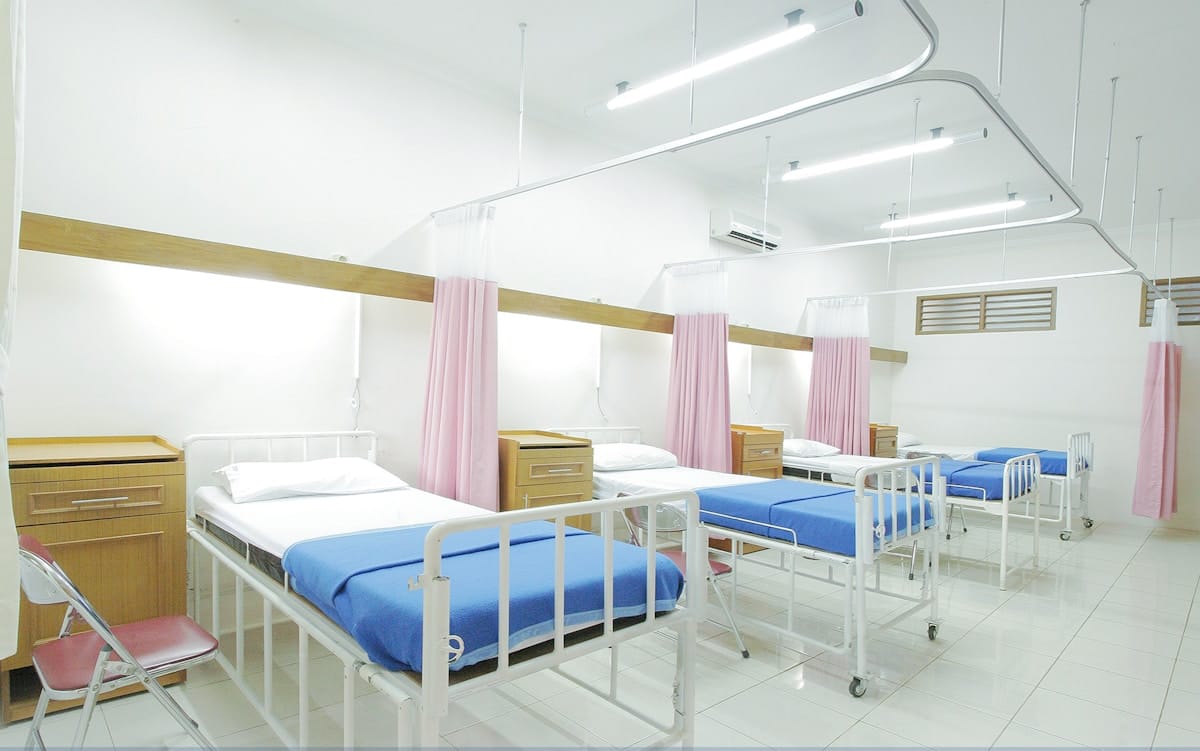
A decision that could reshape how hundreds of thousands of Portuguese people — including a significant number of expats — access hospital care is approaching a critical moment. The government's April 2026 deadline for a study on whether to hand management of five major public hospitals to private operators has now arrived, with the findings set to determine the next chapter in Portugal's long-running debate over the future of the SNS.
Which Hospitals Are Affected?
The five hospitals under review are located in some of Portugal's most densely populated areas:
- Hospital de Braga — already operating under a public-private partnership (PPP) model with Trofa Saúde, its contract is up for revision
- Hospital de Loures — serving the northern Lisbon metropolitan area
- Hospital de Vila Franca de Xira — in the Ribatejo corridor east of Lisbon
- Hospital Professor Doutor Fernando Fonseca (Amadora-Sintra) — one of the largest in greater Lisbon
- Hospital Garcia de Orta — in Almada, serving the south bank of the Tagus
The study was commissioned by the Central Administration of the Health System (ACSS) and was required to be completed by April 2026 under the terms agreed in the 2026 State Budget. Its findings will inform whether the government moves to tender new PPP contracts for clinical management at all five sites. For broader context, see the SPD/Ordem dos Médicos challenge to Infarmed's generic-prescription circular for glucose sensors.
What Are PPPs in Healthcare?
Public-private partnerships in the Portuguese health system are contractual arrangements in which a private operator manages the clinical services of a public hospital while the building and infrastructure remain state property. The private partner is paid a fixed fee per patient treated, with bonuses or penalties tied to performance indicators.
Portugal has used this model before. The Hospital de Braga, which opened under PPP management in 2011, and the Hospital de Cascais have been held up by supporters as examples of improved efficiency and patient satisfaction. Critics, including the main unions and the Socialist Party, argue that PPPs siphon money from the public system and create a two-tier approach to care.
The Scale of the Change
The five hospitals affected collectively serve millions of patients per year across the greater Lisbon region and Braga. According to data from the Ministry of Health, SNS spending on existing PPPs will increase by 40 per cent in 2026, reaching EUR 325 million — driven partly by cost increases at the Hospital de Cascais and the new Hospital de Lisboa Oriental, currently under construction in Marvila, which will also operate under a PPP model when it opens.
If the ACSS study recommends proceeding with all five new partnerships, the government would need to launch public procurement tenders — a process that could take 12 to 18 months — before any management change takes effect. Clinical services would not change overnight.
The Political Battle
The decision is contentious. The Montenegro government has defended the PPP model as a pragmatic response to what it called "severe failures" and "a reduction in quality" in public hospital management. Health Minister Ana Paula Martins has argued that private operators bring management discipline and accountability that the current structure struggles to deliver.
The Socialist Party has vowed to oppose new PPP contracts, arguing they represent a privatisation of the SNS by stealth. The CGTP union federation — which staged its largest protest march in years last week — has listed SNS protection as one of its core demands.
The government, which does not hold an absolute majority, will need to secure support in parliament to advance legislation enabling new contracts. That process is likely to be hard-fought.
What the Data Shows
The broader context for this debate is a health system under real strain. Portugal's SNS delivered 79.9 per cent of emergency attendances, 73.5 per cent of surgeries, and 85.1 per cent of diagnostic acts in 2024 — significant majorities, but declining as more activity migrates to the private sector. In outpatient consultations, the SNS's share has fallen to just over 60 per cent, with private hospitals now accounting for 37.6 per cent of total consultations nationally.
Waiting times for certain SNS-covered exams performed in the private sector — including mammographies and some specialist imaging — have stretched to nearly 12 months in some regions, a figure cited in a recent investigation by Observador. The regulator has already issued fines to private providers for failing to meet contracted response times.
What This Means for Expats
For expats registered with the SNS, the most immediate practical question is whether the quality and accessibility of care at these hospitals will change. The short answer is: not immediately. Any new PPP contract would take time to negotiate and implement, and clinical staff continuity is typically guaranteed during transitions.
However, the PPP debate matters in a broader sense for anyone considering healthcare choices in Portugal. Private health insurance — widely used by expats — already covers treatment at most of the hospitals under review. The question is whether the Portuguese state will continue to guarantee universal access at the same level, or whether, over time, the SNS becomes a safety net rather than a comprehensive service.
Those relying on the SNS directly — which includes many lower-income residents, EU citizens using the European Health Insurance Card (EHIC), and long-term residents who have not taken out private cover — have the most at stake in how this decision is made. (Background: see our piece on the ANF-controlled Farminveste holding.)
The ACSS study deadline was April 2026. The government is expected to announce its next steps on the five hospital PPPs in the coming weeks. On the SNS-governance accountability tape, our read on the IGAS findings against ex-SNS executive director António Gandra D'Almeida and the LTFP–militar accountability gap sets the latest reference. On the SNS workforce side, our read on the 7 May SNS doctor package — tarefeiro contracts made excecional, the urgência bonus to 80.5% above the 250-hour cap, and INEM reorganised as a regime-especial institute sets the latest reference. On the public-health side, our read on the DGS Orientação n.º 001/2026 on the MV Hondius hantavirus outbreak (Curry Cabral, Dona Estefânia and ULS São João named as reference units, INEM activated, Portugal risk 'muito baixo') sets the latest reference. On the second-coverage and SNS-private-system rail, our 17 May EY-Parthenon / APHP / APS reading — €1.945 billion of 2023 SNS savings from private second-coverage volume, 9 million procedures channelled, surgeries carrying €846m, consultations €688m, MCDT €234m, and the policy push for inter-system fiscal parity on the IRS-deduction-cap rebalancing in OE2027 sets the latest reference. On the public-health surveillance and vaccination rail, our 18 May ULSBA Beja read — three epidemiologically-linked measles cases since early April across the 30-to-55 age band, nearly 500 risk contacts mapped, 120+ post-exposure VASPR doses delivered through the USF / UCSP / Hospital José Joaquim Fernandes chain and Bruno Pinto Rebelo's surto classification sets the latest reference. On the SNS access and primary-care setup side, our 2026 practical guide to getting the Número de Utente do SNS — the centro de saúde first-visit walk-in for foreign residents, the gov.pt online pedido authenticated by Chave Móvel Digital, the RNU registration, the SNS24 app activation, the EU/EEA S1 and EHIC routes, the CPLP and third-country residence-permit equivalence, the médico de família queue, and the 2026 taxas moderadoras frame that now hits only hospital emergency-department visits without primary-care referral sets the latest reference. On the bombeiros INEM financing side of the file, our 31 May read on Health Minister Ana Paula Martins anchoring the PEM bombeiros monthly subsidy at €10,800 from 1 July 2026 — a 23% lift on the 520-post INEM emergency-ambulance network that adds €2,040 per post, with the other protocol lines moving on the inflation index and the accumulated two-year cabinet lift now above 54% sets the latest reference. On the SNS, Serviço Nacional de Saúde, Centro de Saúde registration, Número de Utente, SNS24 triage line and taxas-moderadoras side of the file, our 2026 practical guide to registering with the SNS in Portugal — the Número de Utente, the USF / UCSP family-doctor model, the SNS24 portal flow, the taxas-moderadoras schedule and the documents your Centro de Saúde will ask foreign residents for sets the latest reference. On the Algarve, Faro, private-healthcare, Lusíadas Saúde, Vivalto Santé, hospital-investment and SNS-capacity side of the file, our 22 June read on Lusíadas Saúde committing €60 million to a new five-floor hospital in Faro — 28 beds, five operating theatres, an ICU and 500 jobs landing in the Algarve by the end of 2027 sets the latest reference. On the maternity, prenatal-care, birth-registration and family-benefit side of the file, our 2026 guide to having a baby in Portugal — SNS prenatal care, public vs private maternity, registering the birth and parental benefits sets the latest reference. For readers navigating the health system, our practical guide to medical emergencies in Portugal — 112, INEM and the SNS 24 line sets the latest reference. For readers facing the question of elderly care, our practical guide to caring for an ageing parent in Portugal — care homes, home support and benefits sets the latest reference. On the public-health and chronic-disease side of the file, our coverage of the INE National Health Survey on chronic illness and obesity sets the latest reference. On the public-health, SNS and waiting-list side of the file, Portugal's new SINACC system for SNS-contracted private and charity care sets the latest reference. On the health-financing and SNS-cost side of the file, Portugal's €31.9 billion health-spending bill for 2025 sets the latest reference. On the beach-safety, coastal-water and summer-health side of the file, our explainer on the Vibrio beach-safety risk sets the latest reference. On the youth mental-health and public-health side of the file, the expanded Cheque-Psicólogo and Cheque-Nutricionista vouchers sets the latest reference. On the blood-supply and donation side of the file, our guide to giving blood in Portugal sets the latest reference. On the SNS surgical waiting-lists side of the file, Portugal's switch to the SINACC surgical waiting-list system sets the latest reference. On the public-hospital and Misericórdias side of the file, the return of public hospitals to the Misericórdias sets the latest reference. On the maternity and hospital-access side of the file, how maternity closures are pushing births into ambulances shows how far some women now travel to give birth. On the seismic-preparedness side of the file, doctors' call for a national earthquake-resilience audit of hospitals sets out what a major quake would demand of Portugal's hospitals. On the health-service side of the file, the row over emergency-room waiting times weighs the minister's reassurance against the queues the SNS's own data showed. On the reproductive-health and SNS-access side of the file, the Almada hospital that suspended its abortion service shows how a staffing gap can put a legal, time-limited procedure out of reach. On the healthcare-access side of the file, our guide to the ADSE public-sector health subsystem explains who can join, what the 3.5% costs, and how it works alongside the SNS. On the SNS-access and medicines side of the file, the warning that outdated registry records can cut off medicine subsidies explains how a stale patient record can quietly break a co-payment. On the public-health side of the file, the gastroenteritis outbreak on Faial tracks the surge at the Hospital da Horta and the advice for residents while the cause is still unconfirmed. On the health-access side of the file, Portugal's postponed SNS surgery-booking system explains the delay to the new SINACC platform and the surgery backlog it inherits.