Portugal's Labour Reform Reaches Breaking Point: Near-Deal After 53 Meetings, But CGTP Cries Foul
After eight months and 53 rounds of negotiation, Portugal's landmark labour law reform edged toward a conclusion on Monday — but not without a fresh burst of political controversy that reveals just how fractured the country's industrial relations...
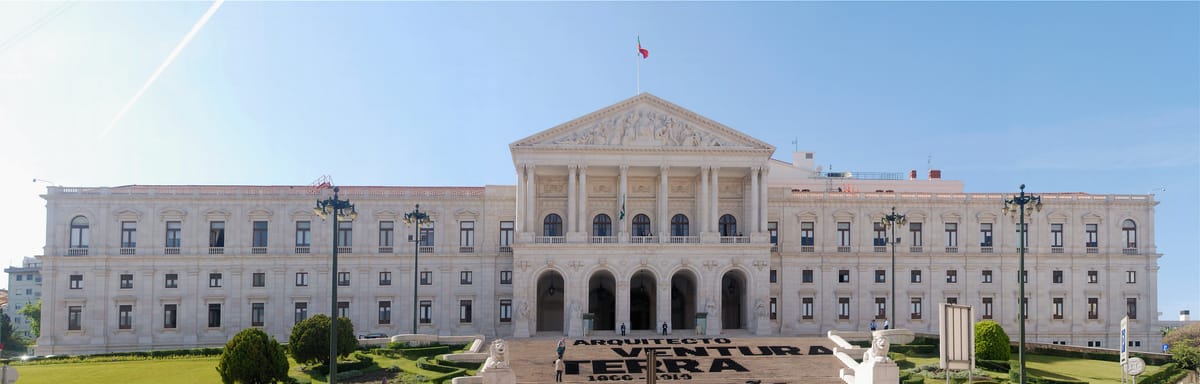
After eight months and 53 rounds of negotiation, Portugal's landmark labour law reform edged toward a conclusion on Monday — but not without a fresh burst of political controversy that reveals just how fractured the country's industrial relations landscape has become.
Labour Minister Maria do Rosário Palma Ramalho emerged from a four-hour session with the four main employer confederations and the UGT union federation to announce that talks had reached what she described as "a level of construction" requiring each party to consult its internal decision-making bodies before any formal agreement can be signed. The UGT secretariat is due to meet Thursday for what will effectively be a ratification vote. A plenary session of the Permanent Social Concertation Commission — the formal constitutional body for such negotiations — will follow "shortly."
"The meeting went well, in a spirit of cordiality that has been maintained throughout these more than eight months of negotiations," Ramalho said in a brief statement outside the Ministry of Labour. "We reached a level of construction of the proposal that requires each structure to consult its organs and members. This consultation will naturally be definitive."
The CGTP Is Not at the Table
What Ramalho did not say, but what dominated the day's political coverage, was the conspicuous absence of the CGTP — Portugal's larger, more radical union confederation, which claims to represent more workers than the UGT.
CGTP secretary-general Tiago Oliveira was waiting outside the ministry when Ramalho's meeting began, and he did not hide his anger. "The government is trying to cook its strategy on the margins of the Social Concertation meetings," he told reporters. "This process has shown that the government is pursuing an unconstitutional strategy by conducting negotiations outside the formal Concertation Commission — and by keeping the CGTP out of the entire process."
The procedural dispute has legal substance. Portugal's constitution requires social concertation — a formal tripartite process involving government, employers and all recognised union confederations — for major labour law changes. The government's decision to negotiate primarily with the UGT and employer bodies, rather than through the full Concertation Commission, has exposed it to constitutional challenges even before a single word of the new code is enacted.
What the Proposed Changes Actually Say
The reform touches nearly every dimension of the employment relationship. Several key provisions have been significantly revised from the government's original July 2025 proposal following months of pushback from unions and employers alike.
On fixed-term contracts, the initial proposal would have allowed any worker "who has never held a permanent employment contract" to be hired on a fixed-term basis — a formulation that critics said risked locking young people into a permanent precariat. The revised version narrows this to workers who have "never held any employment contract at all," reducing the universe of potential fixed-term hires.
On outsourcing after layoffs, the original text would have abolished entirely the existing 12-month prohibition on outsourcing functions previously performed by workers made redundant through collective dismissal or job elimination. The revised proposal retains some restrictions, though the exact terms remain under wraps pending the internal consultations.
The reforms also touch on remote work rules, working-time flexibility, and the conditions under which employers can dismiss workers — each a politically charged area in a country where the 2012 Troika-era labour reforms left deep scars on the public consciousness.
Why This Matters for Workers and Employers in Portugal
For the roughly 800,000 foreign nationals living and working in Portugal — many in precarious employment in hospitality, domestic services and construction — these reforms carry direct consequences. Fixed-term contract rules directly affect job security and access to social benefits. Outsourcing rules determine whether employers can replace dismissed workers with cheaper contract labour.
Employer groups have been largely supportive of the reforms, arguing that Portugal's rigid dismissal rules make businesses reluctant to hire, particularly in an economic environment already weakened by the storm damage of early 2026. The UGT's conditional endorsement reflects a pragmatic calculation: a seat at the table is worth more than principled opposition from the outside.
The CGTP's exclusion, however, raises the risk of legal challenges that could delay or unwind any agreement. It also sets the stage for further industrial action, following the broad-based public sector strike of February that hit 80 percent adherence and shuttered schools and hospitals.
Portugal's fiscal position adds further pressure. As the government's 2026 budget projections have been rendered obsolete by the twin shocks of the Middle East energy crisis and Storm Kristin's aftermath, the economic case for labour market flexibility — and the political cost of getting it wrong — has never been higher.
Workers earning around the 2026 minimum wage of €870 per month will be watching closely. Whether the near-deal survives internal consultations — and whether a CGTP-excluded agreement can withstand constitutional scrutiny — will shape Portuguese labour relations for years to come.
The minister has said all sides will reconvene in a formal Concertation Commission plenary. Whether that meeting ends in agreement or collapse, the stakes for Portugal's workforce — Portuguese and foreign alike — could not be higher. This is, after all, the reform meeting that was meant to define workers' rights for a generation.