Porto Stamps the Country's Largest Build-to-Rent Project at 331 Campanhã Homes With Sonae Sierra and Solive — €525-€950 Middle-Class Tarifa Across the Pedro Duarte Public-Private Frame
Câmara Municipal do Porto signs memorandum with Sonae Sierra and Solive/Tecnibuild for 331 accessible-rent flats in Campanhã — country's largest BTR project. Monthly rents €525-€950, two-year build window, Porto Vivo SRU manages tenancies.
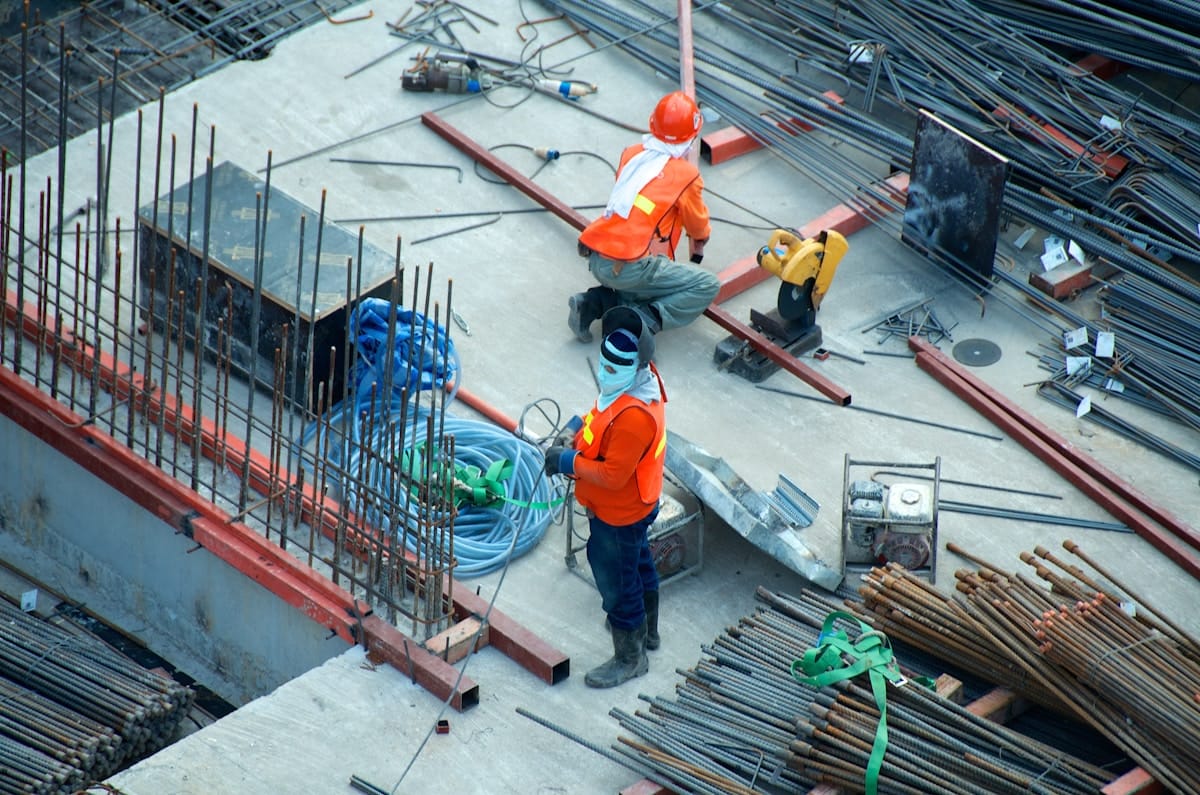
The Câmara Municipal do Porto (Porto City Council) signed a memorandum on Tuesday 16 June 2026 with developers Sonae Sierra and the Solive/Tecnibuild group to build what the municipality is calling the country's largest build-to-rent (BTR) project — 331 accessible-rent flats in Campanhã, eastern Porto, to be subsequently managed by the municipal urban-rehabilitation company Porto Vivo SRU (Sociedade de Reabilitação Urbana). Monthly rents will fall between €525 and €950, targeted explicitly at middle-class families squeezed out of the open-market rental stock. Mayor Pedro Duarte (PSD) formalised the partnership at the signing ceremony, framing the project as the city's principal answer to the supply-demand imbalance that has driven Porto rents to historical highs over the post-2022 cycle.
The deal in numbers
- 331 affordable-rent units, the largest single BTR programme launched in Portugal to date.
- ~6,000 sq m of green space integrated into the masterplan.
- Monthly rents €525-€950, calibrated for the agregado familiar (household) middle-income bracket — broadly the 3rd to 6th deciles of Porto household income.
- Two-year construction window targeted from the memorandum signing.
- Campanhã parish location — the easternmost civil parish of Porto, the city's principal urban-renewal corridor anchored on the Estação de Campanhã hub and the Matadouro Industrial regeneration zone.
- Public-private frame: Sonae Sierra and Solive/Tecnibuild build and finance; Porto Vivo SRU manages tenancies and eligibility under the municipal renda acessível (affordable-rent) tarifa.
Context — Porto's second BTR push
This is the municipality's second public-private BTR project. The first, Jardins do Oriente, is being developed by the Ageas Portugal group with an €18 million investment, delivering 124 accessible-rent flats plus 27 market-rate units. The first stone was laid in March 2026, with 10-year leases on the accessible-rent tier and a renewal option. The Campanhã Sonae Sierra / Solive scheme nearly triples the unit count of the first project and adopts the same Porto Vivo SRU management overlay.
The structural backdrop is the Banco de Portugal's June 2026 Boletim Económico reading that finally flipped the national demographic-vs-supply housing gap to surplus for the first time in 11 years — but the BdP's own commentary stressed that the rebalancing is concentrated in low-pressure interior concelhos and that high-pressure urban metros (Lisboa, Porto, Algarve) remain structurally under-supplied at the income-affordable end of the market. The Porto BTR push is the municipal-policy answer to exactly that residual urban deficit.
Why Campanhã
Campanhã is Porto's eastern industrial frontier, anchored on the high-speed-rail-ready Estação de Campanhã hub, the new Matadouro creative-cluster regeneration, the Asprela university and São João hospital corridor immediately to the north, and the Quintas Históricas heritage axis. Land cost and zoning headroom are markedly more permissive than in the western Boavista–Foz corridor or the central Aliados–Sé–Ribeira heritage envelope, making accessible-rent unit economics achievable at the €525-€950 tarifa.
The Sonae Sierra angle
Sonae Sierra — the Sonae group's real-estate arm, historically focused on shopping-centre asset management across Iberia and Latin America — has been pivoting into the residential build-to-rent vertical since the March 2026 partnership announcement with the Casais group for a 200-flat BTR project in Porto. The Campanhã memorandum with Solive/Tecnibuild marks Sonae Sierra's second BTR build-out in the city inside three months and confirms the group's reading that BTR is the cleanest entry-point into the post-2024 Pacote Fiscal Habitação tax frame for institutional residential capital. Sonae has signalled total residential BTR spend of approximately €100 million across its current Portuguese pipeline.
What This Means for Expats
- Eligibility — the renda acessível track: The Porto Vivo SRU accessible-rent regime is open to households with incomes within the municipal eligibility band, subject to NIF registration and tax-resident status proof. Non-resident foreigners are typically not eligible until they hold a residency title; D7, D8, D3 and Article 6 naturalisation holders meeting the income band can usually apply through the standard SRU channel.
- Price benchmark: The €525-€950 monthly range sits roughly 40-55% below open-market Campanhã rents (which Idealista pegs at ~€900-€1,750 for T1-T3 stock as of June 2026). For expat households at the middle-income bracket, the gap is material.
- Delivery timeline: Two-year construction window suggests first occupancies in mid-to-late 2028. Households planning a Porto relocation should track Porto Vivo SRU's application calendar — the first BTR project (Jardins do Oriente) opened applications roughly six months ahead of occupancy.
- Where to track the file: Porto Vivo SRU publishes accessible-rent calls at portovivosru.pt; the Câmara Municipal do Porto press office releases the eligibility band updates annually with the municipal Orçamento (Budget).
- Read across to Lisbon: No comparable BTR-scale municipal scheme is currently on the Câmara Municipal de Lisboa pipeline at this unit count; expats deciding between Porto and Lisbon on a rental-affordability test now have a measurable Porto-side argument.
What to watch next
The Sonae Sierra / Solive Campanhã build-out timeline will be the principal near-term checkpoint — the foundation-laying ceremony is typically the next public milestone three-to-six months after a memorandum signing. The wider read is whether the Porto BTR template is replicable across other intermediary-city municipalities (Braga, Coimbra, Aveiro, Funchal) facing the same supply-side gap — and whether the Sonae Sierra / Casais / Ageas / Solve quartet expands the BTR allocation across the post-Pacote Fiscal Habitação institutional pipeline once the first Porto Vivo SRU tenant cohorts are seated.
Sources: ECO, Câmara Municipal do Porto press office, Porto Vivo SRU, Idealista rental benchmark data, Banco de Portugal June 2026 Boletim Económico. On the trade-fair, Porto business and commercial-property side of the file, the €40 million sale of the Exponor fair complex sets the latest reference. On the local-government side of the file, the new Porto to Gondomar municipal boundary sets out which parcels moved, and what a change of município does to a household's bills. On the Porto city side of the file, the Matadouro cultural centre's slip to a phased opening across 2027 sets out what the 40 million euro M-ODU will hold, and how a summer 2026 opening became a fit-out year. On the Porto municipal side of the file, the court freeze on the Mercado do Bolhão stall auction sets out the popular action a traders' association filed on 30 July, what admitting a providência cautelar actually suspends, and the July auction in which a fish stall with a €343.80 base went for €7,550 a month.