Portaria 209/2026/1 Rewrites Out-of-Hours Pharmacy Rules — €2.50 Surcharge on the Postigo, 40-Hour Weekly Floor, and ULS-Run Schedules That Take Effect Three Months Before Decreto-Lei 128/2025 Lands
Portaria 209/2026/1 (DR 88, 7 May) rewires the operating-hours framework for Portugal's pharmacies — €2.50 after-hours surcharge ceiling, a 40-hour weekly minimum, ULS-run schedules and a 30-day countdown to Decreto-Lei 128/2025.
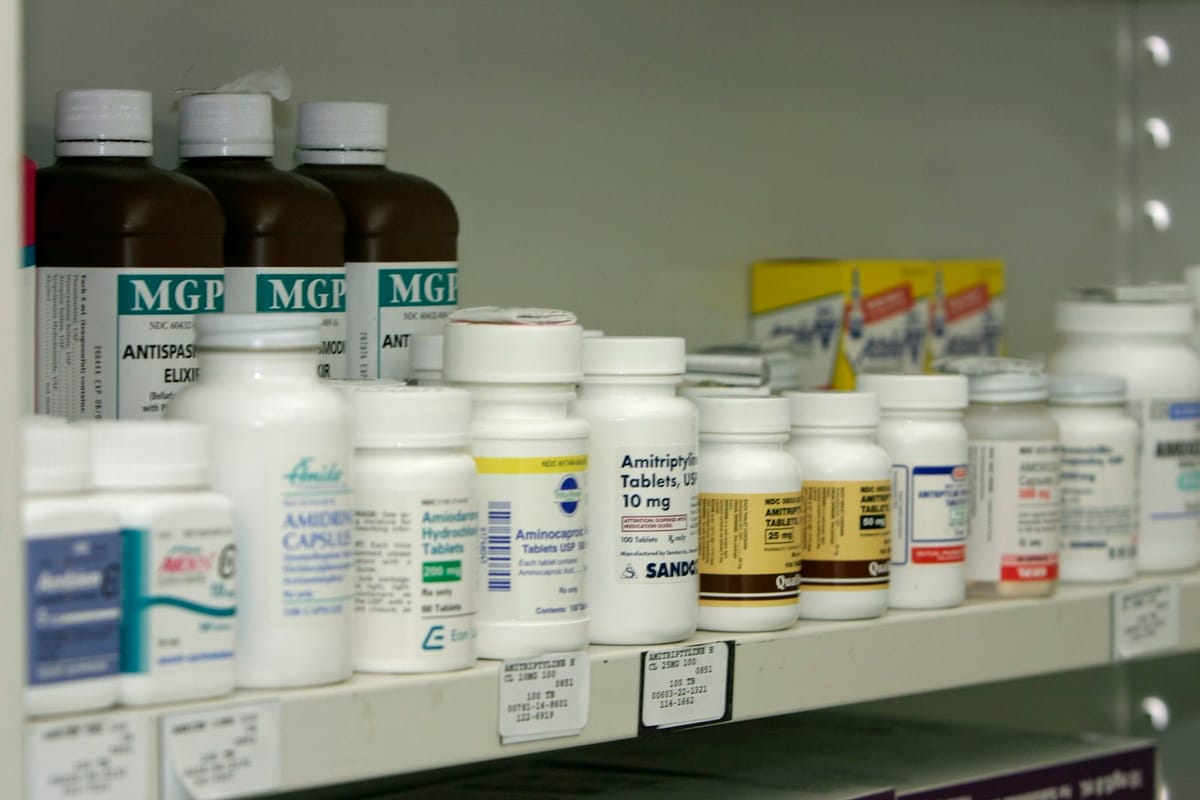
The Diário da República's first series, edition 88, carried Portaria n.º 209/2026/1 on Wednesday 7 May — a Health Ministry instrument that reshapes how Portugal's roughly 2,950 farmácias de oficina handle their operating hours, their out-of-hours rotation and what they can charge a walk-up customer who arrives after the lights are off. Signed by Secretary of State for Health Ana Margarida Pinheiro Povo on 30 April, the portaria takes effect 30 days after publication — placing the new rules live on 6 June 2026, three weeks before Decreto-Lei n.º 128/2025 of 17 December begins to bite the underlying regime.
The text is technically the second amendment to Portaria 277/2012 of 12 September — the schedule-and-surcharge instrument that has framed Portuguese pharmacy operating hours since the Passos Coelho years. The first amendment came in 2014. Wednesday's rewrite is the first substantive update in more than a decade and the first to be drafted under the new SNS architecture in which the old ARS regional health authorities are gone and Unidades Locais de Saúde now hold the licensing and oversight pen for primary-care services across the territory.
The Numbers Worth Remembering
- 40 hours a week minimum. Article 2 fixes the weekly opening minimum at 40 hours, distributed across the daytime windows of every day of the week except Sunday. Pharmacies that open longer keep their flexibility; the floor stops a community pharmacy from cutting back to skeleton coverage.
- €2.50 maximum after-hours surcharge. Article 7 sets the legal ceiling on what a farmácia em assistência farmacêutica — a duty pharmacy in the rotation — can add to the price of a non-prescribed medicine sold outside its normal hours. The fee never applies to medicines prescribed today or yesterday on a Receita Sem Papel.
- 30 September annual deadline. The associations that represent pharmacies — the ANF, ANTF and the regional grémios — must file the next year's duty roster with the territorial Unidade Local de Saúde by 30 September. The ULS has until 30 October to deliver an opinion. Silence equals approval.
- 15-day municipal pronouncement. The ULS must consult the affected câmaras municipais (or, where mandated, the Comunidade Intermunicipal) and the municipal opinion has to land within 15 days. That carves a faster lane than the prior multi-step ARS-municipality cycle.
- 30-day entry into force. The portaria says it kicks in 30 days after the 7 May publication — i.e., 6 June 2026.
The Postigo and the Closed-Door Service
Article 5 codifies what most Portuguese residents already know but few foreign residents have ever been told: a duty pharmacy is allowed, after its normal closing hour, to lock the public out of the premises and serve customers through a postigo — a hatch in the front door or shop window. The new wording makes the practice explicit and ties it to the requirement that the pharmacy maintain conditions adequate to the assistência farmacêutica service. In practice, after about 20:00 in most cities and after 22:00 in some, the only way to reach the duty pharmacy is to ring the postigo bell, hand the prescription through the hatch, and pay through the same opening.
That service is what triggers the €2.50 surcharge. The fee survives unchanged from the 2012 instrument's last set value, but the 2026 portaria recasts its scope: it applies only to medicines and other products NOT prescribed on a same-day or previous-day Receita Sem Papel — an alignment with the dematerialised prescription regime that has been mandatory in the SNS since 2016 and now covers more than 95% of Portuguese prescription volume.
What Decreto-Lei 128/2025 Will Do — and Why the Portaria Comes First
The portaria is, in regulatory terms, the operational implementing instrument for Decreto-Lei n.º 128/2025 of 17 December — the third revision of Decreto-Lei 53/2007, the foundational pharmacy-hours statute. The decreto-lei text rewrites the broader framework for pharmacy out-of-hours assistance, expanding what duty pharmacies can dispense without a prescription, tightening the rules on closures during school summer breaks, and restating the relationship between the pharmacy network and the SNS24 telephone triage line. The decreto-lei has not yet entered into force — the legislator built in a phased calendar — and the portaria's 30-day delay is calibrated to deliver the operating-rules layer just before the substantive layer activates.
For residents, the practical sequence is: from 6 June the new schedules-and-surcharge framework is the law, and over the following weeks the duty rosters for the back half of 2026 will start being published on Infarmed and on individual pharmacy websites under the new format.
What Changes for Daily Pharmacy Use
The mechanics of getting a box of paracetamol or a Receita Sem Papel filled at midnight do not change. What changes is who oversees the system and how disputes get resolved. Until 2025, an ARS regional director would sign off on the rotation and a câmara municipal could only escalate a complaint through the ARS. From 6 June, the same opinion-and-pronouncement loop runs through the ULS — closer to the patient, integrated with primary-care commissioning, and on a tighter clock. Pharmacy associations, by extension, can now demand turnaround from the ULS the way they used to from the ARS, with the same statutory silence-equals-approval rule.
The portaria also formalises something the 2012 regime left ambiguous: a pharmacy schedule, once approved, can only be revised if a fact materially alters the situation — the opening, transfer or closure of a farmácia in the same area, or a change in the weekly opening hours that affects a neighbour. That stops casual rotation tweaks and forces the system to deal with permanent shocks rather than seasonal preferences.
The 2,950-Pharmacy Network in Context
Portugal has roughly 2,950 farmácias de oficina serving a resident population of just over 10.4 million — a per-capita density slightly below the EU average but distributed across a unique geography in which most of the interior runs on a single duty pharmacy per concelho. The new 40-hour floor matters most in those low-density municipalities, where the practical question is not how many hours a farmácia opens but whether it opens at all on a given Saturday.
Infarmed's licence database lists more than 100 farmácias inside Lisbon city alone. Both metropolitan areas — Lisboa and Porto — operate a continuous duty-rotation pattern that means at least one pharmacy on most major arteries is open through the night. The interior pattern is closer to a single duty pharmacy per district capital plus a back-up rotation in towns above 5,000 inhabitants. The new ULS-driven oversight is supposed to close some of those interior gaps; the unions of pharmacy owners have signalled they expect more aggressive enforcement.
What This Means for Expats
- The €2.50 surcharge is the legal ceiling, not a flat fee. Some duty pharmacies waive it entirely; some apply it only after midnight; some apply it on every after-hours sale. From 6 June, the absolute maximum any farmácia can charge is €2.50, and only on items NOT covered by today's or yesterday's Receita Sem Papel.
- The Receita Sem Papel exemption is real. If your doctor prescribed your medicine today (or yesterday) on the dematerialised system — the SMS or app code most utentes use — the duty pharmacy must dispense it at the same price as during normal hours. Keep the SMS code; it is your ticket to the no-surcharge lane.
- Saturday afternoon is now protected. The 40-hour minimum forces every farmácia to keep at least some Saturday daytime presence. In small towns this codifies a practice the larger pharmacy chains have moved away from in recent years.
- Use the postigo correctly. After hours at a duty pharmacy, ring the bell, do NOT bang on the door, and have your prescription code ready. The pharmacist on duty has the right to lock the premises but must serve through the hatch.
- Look up the duty schedule before you need it. The associative bodies publish the duty rosters on the pharmacies' own websites and on Infarmed's portal. From 6 June onward, the rosters must also be displayed at every pharmacy's main entrance. SNS24's 808 24 24 24 hotline can also direct you to the closest open pharmacy at any hour.
- The regime is settling in for a phased rollout. The portaria comes live on 6 June; Decreto-Lei 128/2025 follows on its own calendar, with the most substantive changes — including expanded over-the-counter dispensing during duty hours — landing later in 2026. Foreign residents who have moved to Portugal in the past year should not expect the system to look identical in December as it does today.
For a country whose health-system reputation rests on the public-private mesh of SNS, ADSE, voluntary insurance and the corner farmácia, Wednesday's portaria is technical scaffolding rather than headline news. But it is the kind of scaffolding that decides what happens at 23:30 on a Tuesday when the toddler has a fever and the GP cannot be reached — which makes it, for foreign residents in particular, one of the most consequential regulatory texts published this year.