Pedro Sampaio Nunes Says Portugal Needs Four Nuclear Plants and Confirms Exploratory Talks With CNNC for Two 1,200 MW Reactors at €10 Billion
Sunday Público interview: ex-Secretary of State for Science Pedro Sampaio Nunes calls Portugal's renewables-only energy plan 'insustentável' and pushes for four nuclear plants. Confirms exploratory talks with CNNC for two 1,200 MW reactors at €10 billion (~€4,000/kW) within six years.
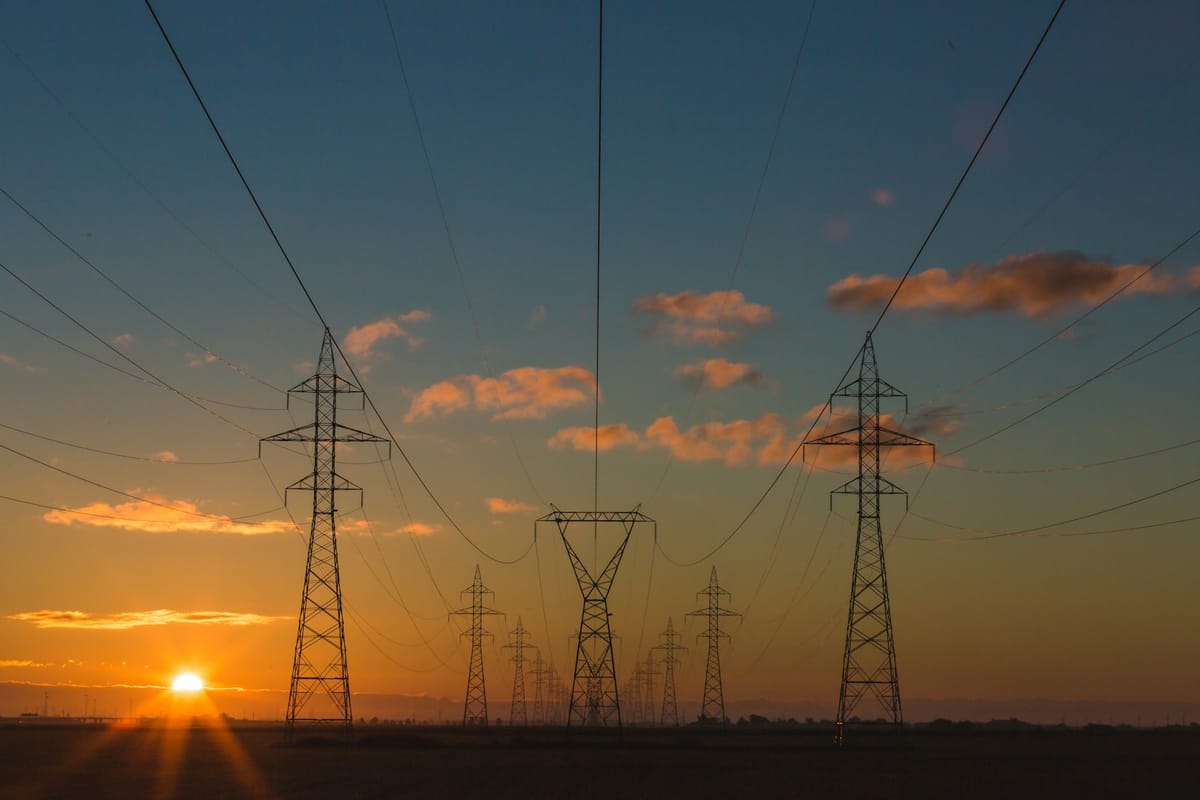
Portugal's nuclear-energy debate, dormant since the country's only research reactor at Sacavém was quietly decommissioned in 2019, returned to the Sunday front page on 3 May. In an interview with Público's economy section, Pedro Sampaio Nunes — former director of the European Commission's new energy technologies division and a former Secretary of State for Science and Innovation in the Santana Lopes government — argued that Portugal's current energy strategy is insustentável and incapable of providing the predictability the economy needs. His prescription is direct: build four nuclear plants and treat them as the backbone of an energy mix that also includes solar, wind and hydro.
The most concrete piece of news in the interview is that Sampaio Nunes has held what he calls conversações exploratórias with the China National Nuclear Corporation (CNNC) about siting two large reactors in Portugal. The headline numbers: two units of 1,200 MW each, an investment envelope of around €10 billion — roughly €4,000 per kilowatt of installed capacity — and a six-year construction window. Together the two reactors would add 2,400 MW of firm baseload to a grid that today depends on imports, hydro and gas to firm up its high renewables share.
The Argument Against an All-Renewables Plan
The interview is also a direct challenge to Environment Minister Maria da Graça Carvalho, who has held the line that Portugal's path to climate neutrality runs through wind, solar, hydro and storage. Sampaio Nunes pushes back on two grounds. First, he argues that intermittent renewables impose hidden system costs — backup capacity, reinforced transmission, curtailment — that the comparative cost-of-energy charts rarely include. Second, he disputes the assumption that renewables are unambiguously cleaner than nuclear, pointing to the materials intensity of solar and wind manufacturing and to the disposal issues of end-of-life equipment.
Whether or not those arguments win the policy debate, Sampaio Nunes is no marginal voice. His Brussels résumé and ministerial track record place him in a small club of Portuguese technocrats who have run an EU energy desk. The Público piece notes that he is not alone: figures including former Economy Minister Mira Amaral have argued for years that the absence of nuclear from Portugal's mix reflects political path-dependence rather than physics or economics.
Why This Matters Now
The timing is not accidental. The PSI's electricity stocks rallied through the past week even as Q1 GDP printed at zero, and Brent at $110 has restored the case for energy security as a first-order policy concern. Spain operates five nuclear sites on the Iberian peninsula (Almaraz, Cofrentes, Trillo, Vandellós II and Ascó), so Portugal already imports nuclear power indirectly through the MIBEL market. The Sampaio Nunes argument is that domestic generation closes the loop on price and supply.
What This Means for Expats
- No imminent change to your electricity bill. Even on Sampaio Nunes's six-year timeline, two 1,200 MW reactors come online no earlier than 2032. Today's tariffs continue to be set by ERSE and shaped by Iberian gas, hydro and renewables.
- Government position is unchanged. The interview is an outsider intervention. Brussels has not been formally engaged, no site has been selected, and no parliamentary majority exists for revising Portugal's de facto nuclear-free posture.
- Watch the MIBEL spread. Portuguese wholesale prices already track Spanish nuclear output. If Almaraz Unit 1 closes on schedule in 2027, expect upward pressure on Iberian power prices — a stronger near-term signal than any Portuguese reactor proposal.
- The renewables build-out continues. Solar auctions, offshore wind tenders, and grid reinforcement remain the operational reality through the end of the decade, regardless of how the nuclear debate evolves.
- Geopolitics matters. A Chinese-built reactor in an EU member state would face intense Brussels and Washington scrutiny under the foreign-subsidy and economic-security regimes. The CNNC angle is a discussion document, not an investment plan.