PCP to Table a €50 Permanent Monthly Pension Increase From July 1 — Communist Bench Pushes a Structural Raise Over the Government's Preferred One-Off Bonus, Montenegro Says 'É cedo' to Decide on Another Supplement
PCP to table a €50 permanent monthly pension increase from 1 July, structured as a base-line uplift rather than a one-off bonus. Montenegro says 'é cedo'. Annualised cost around €2.5-2.6 billion against a Programa de Estabilidade just revised down to a null surplus.
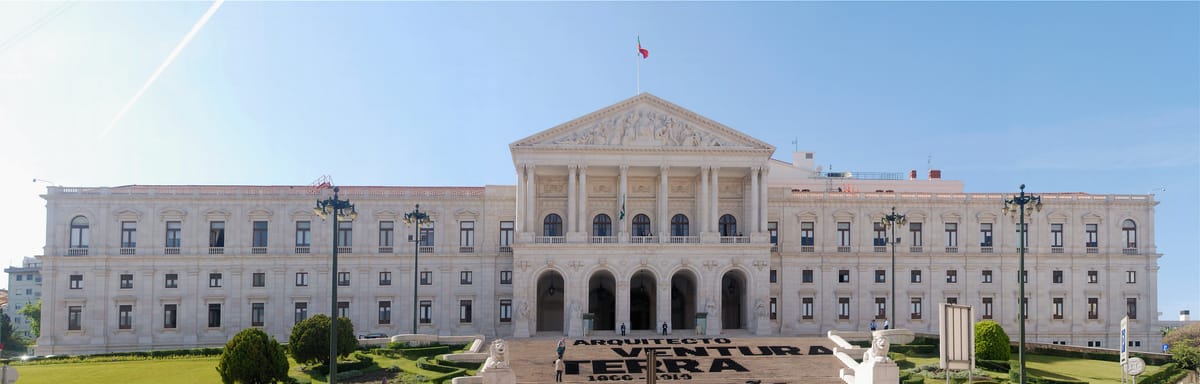
The Partido Comunista Português will table a parliamentary proposal for a €50 permanent monthly increase to all pensions, with effect from July 1, 2026. The PCP frames the measure as a structural raise that 'consolida-se no montante global de cada pensão' — that is, it adds €50 to the base, every month, every year, indexed forward — explicitly in opposition to the government's preferred mechanism of one-off extraordinary supplements paid once a year. Prime Minister Luís Montenegro, asked about the prospect of a further bonus, told reporters this week that 'é cedo' to decide and that the priority is to first 'put the country on the right track, growing more robustly.'
What the PCP is proposing
The Communist bench's draft, set to be filed in the Assembleia da República in the coming days, has three operative features. First, it is a flat €50 per month addition to every pension paid by the public Social Security and Caixa Geral de Aposentações systems, with no income or means test mentioned in the public summary. Second, it is permanent — once added, it stays in the base and is carried forward into subsequent annual updates rather than being clawed back at year-end. Third, the effective date is 1 July 2026, which means the measure would land in pensioners' bank accounts as early as the first half of the second semester if Parliament moves it through the calendar.
Why the structural-vs-one-off distinction matters
Portugal's pension policy in 2024 and 2025 leaned heavily on what the Finance Ministry calls 'apoios extraordinários' — non-recurrent supplements of up to €200 paid once per year, typically in October — rather than on permanent base-level increases. The advantage to the Treasury is that an extraordinary payment does not enter the pension base, and therefore does not compound through the indexing formula in following years; the disadvantage to pensioners is precisely the same — it does not compound. PCP's proposal is engineered to flip that calculus, embedding the €50 inside the base so that the legal pension-update formula carries it forward indefinitely.
The government's position
Montenegro's response stops short of a flat rejection but is plainly not an opening. 'Queremos lá chegar também, mas é cedo. Vamos primeiro pôr o país no caminho certo, a crescer com mais robustez,' the prime minister told journalists. The Finance Ministry has not yet costed the PCP proposal in public, but a back-of-envelope read on the headline number — €50/month × roughly 3.7 million pensions × 14 months — points to an annualised gross cost of the order of €2.5-2.6 billion. That is a non-trivial number set against the Programa de Estabilidade revision Brussels saw last week, in which the Government already dropped the planned 0.1% surplus to a null balance and lifted the 2026 deficit risk after Iran-driven oil prices.
The wider parliamentary context
The PCP draft lands in the same week that CGTP-IN secretary-general Tiago Oliveira used the 1.º de Maio rally between Martim Moniz and Alameda D. Afonso Henriques to call a national general strike for 3 June against the Pacote Laboral / Trabalho XXI labour reform package, with UGT yet to commit either way ahead of the Concertação Social meeting on 7 May. The Assembleia da República's mid-July recess sits at the end of a compressed parliamentary stretch that already includes four PRR-related reforms flagged by the National Monitoring Commission as 'critical' — pensions, in that calendar, will compete for floor time with labour reform, the budget revision and the PRR reform package.
What it means for foreign retirees in Portugal
The proposal applies to pensions paid by Portugal's Social Security (Segurança Social) and Caixa Geral de Aposentações public systems. Foreign retirees drawing a foreign state or occupational pension into a Portuguese bank account would not be directly affected by the €50 base-line uplift; only those who have contributed into the Portuguese system — and are therefore receiving a Portuguese-source state pension — would see the increase. The structural nature of the change does, however, matter for any foreign resident planning to consolidate later years of public-system contributions in Portugal: a higher base-line means a higher floor for the indexing formula in every subsequent year.
Source: ECO, 2 May 2026, on PCP parliamentary group statement and Montenegro press remarks.