Nine Years On, Sócrates' Damages Lawsuit Against the Portuguese State Finally Reaches Trial
Lisbon's administrative court begins hearing former PM José Sócrates' €50,000 damages action against the State, filed in February 2017 over the length of Operação Marquês. A parallel ECtHR complaint gives Portugal until 23 July to respond on fair-trial concerns.

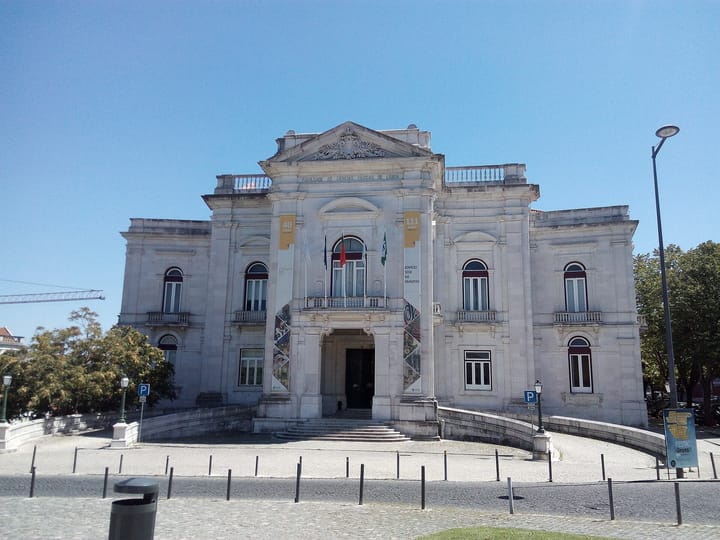
Lisbon’s Tribunal Administrativo de Círculo will on Monday begin hearing a civil damages action that former prime minister José Sócrates filed against the Portuguese State in February 2017 — nine years and two months after it was lodged. The lawsuit seeks €50,000 in compensation for what Sócrates alleges was a “malfunctioning of the administration of justice” in Operação Marquês, the sprawling corruption probe that has dogged his political afterlife for more than a decade.
What Sócrates Is Claiming
At the heart of the case is the length of the inquiry phase of Operação Marquês, which ran more than four years before charges were filed. Sócrates was arrested in November 2014 and spent ten months in preventive detention followed by house arrest. Filed with the Tribunal Administrativo de Lisboa in 2017, the action argues that the State failed in its constitutional duty to deliver criminal justice within a reasonable timeframe and that the delay caused reputational, professional and personal damage.
The €50,000 figure is modest by civil-litigation standards — Sócrates’ lawyers have framed it as a principled request rather than a financial claim — but the legal question at stake is not. If the administrative court finds for the plaintiff, it will be one of the clearest Portuguese rulings yet on when prosecutorial delay becomes a violation of the right to a fair trial under Article 20 of the Constitution and Article 6 of the European Convention on Human Rights.
A Process Still Unresolved
The administrative case reaches trial at a moment when Operação Marquês itself remains unfinished. The criminal trial at the Tribunal Central Criminal de Lisboa has been repeatedly suspended, and late last year the defence sought formal clarifications from the trial judge on whether the statutes of limitations for several corruption counts linked to the Vale de Lobo chapter and Caixa Geral de Depósitos financing may expire in the first half of 2026. A procedural “lapso de escrita” that reopened aspects of the case was, Sócrates said publicly, the final “drop of water” that pushed him to escalate to Strasbourg.
The Strasbourg Track
In June 2025 Sócrates filed a parallel complaint with the European Court of Human Rights. Earlier this month the ECtHR formally put questions to the Portuguese State on whether the duration of the process and the information leaks that have accompanied it are compatible with fair-trial guarantees. Lisbon has until 23 July 2026 to respond; Sócrates will then have around six weeks to reply. Strasbourg has stressed that transmitting questions does not prejudge admissibility.
Why This Matters Beyond Sócrates
Portugal’s criminal justice system has been under sustained criticism from the Council of Europe, the European Commission’s rule-of-law monitor and the Supreme Judicial Council itself for the length of high-profile financial and corruption cases. The administrative court’s ruling — expected in the coming months — will not resolve the criminal proceedings, but it will create a domestic precedent on State liability for judicial delay that could be invoked by any defendant whose case has drifted for years without resolution. For a judicial system that has been cautioned repeatedly about protracted litigation, an adverse ruling would be an uncomfortable first.
For now, what unfolds in the administrative court is a quieter companion to the main criminal trial. But after nine years in the queue, even a quiet hearing carries weight. On the road-PPP, motorway-concession, public-works accountability and judicial side of the file, our read on a Lisbon court sending Sócrates-era Public Works secretary Paulo Campos to trial in the €1 billion road-PPP case sets the latest reference.