Getting a SIM Card and Mobile Plan in Portugal
Researched and written with AI tools from official sources. How we make our guides
How to get a Portuguese mobile number, prepaid or monthly, what it costs, how to keep your number when you switch, and the social internet tariff.
Last verified: October 2026.
Who this is for
- You have just arrived, from the EU or elsewhere, and need a Portuguese number quickly.
- You live here and want a cheaper plan, or want to switch operator and keep your number.
- Your household is on a low income and you want the social internet tariff.
Not for you if: you want home fibre. Read Setting Up Home Internet in Portugal. To leave a contract early, read Cancelling a Telecom Contract in Portugal.
Updated October 2026. On 29 May 2026 the government approved a bill to make ID compulsory for prepaid SIM cards. It still has to pass into law.
A Portuguese mobile number makes daily life easier. Banks, MB Way, and many online services send security codes by text message. You can get a working SIM on your first day. Low-cost plans with no lock-in start at about €4 to €7 a month, with tens of gigabytes of data or more. Keeping your number when you switch operator is free and is completed within one working day of the date you agree.
The networks and the brands
The main mobile operators in Portugal are MEO, NOS, Vodafone, and DIGI. The three older operators also run cheaper online brands with no lock-in. UZO and WOO are two examples. Other companies resell network access too, often aimed at people who call abroad a lot.
Prices change often. ANACOM, the communications regulator, runs a free comparison tool, COM.escolha. It lists operators' plans with VAT included. Use it, then check the operator's own page before you sign.
Prepaid or monthly plan
Prepaid (pré-pago) is the fastest start. You buy a SIM and add credit (a top-up, or carregamento). Many prepaid plans renew automatically each month or week while you have enough credit. There is no lock-in and no credit check.
Monthly plans (pós-pago) are billed each month. Many low-cost monthly plans have no lock-in either. Plans with a lock-in period (fidelização) are more common when bundled with home internet and TV.
For most new arrivals, the simplest path is:
- Get a prepaid SIM or a no-lock-in plan in your first week.
- Get your tax number (NIF) and a Portuguese bank account.
- Move to a better plan later, keeping the same number.
What you need to sign up
Prepaid SIM. Take your passport or residence card. Many sellers ask for ID already. The bill approved by the government on 29 May 2026 would make ID compulsory for every prepaid card, once it becomes law.
Monthly plan. Expect to be asked for:
- a passport, residence card, or Citizen Card (Cartão de Cidadão)
- your NIF
- a payment method, often a Portuguese IBAN for direct debit, or a bank card
- sometimes, proof of address
Requirements differ between brands, so check the sign-up page before you go. See Getting a NIF (Tax Number) in Portugal if you do not have one yet.
What it costs
These are examples from the operators' own websites on 1 October 2026, with VAT included. They are not recommendations.
DIGI, no lock-in, prepaid or monthly:
- 50 GB and unlimited national calls: €4 a month.
- 150 GB and unlimited national calls: €5 a month.
- 200 GB, unlimited national calls, and 400 international minutes: €7 a month.
- Unlimited data and calls: €6 a month for one number, or €5 with DIGI home internet. Extra numbers cost less.
UZO, no lock-in:
- Monthly: 100 GB for €5, or unlimited data for €7, both with unlimited minutes and 1,000 texts. UZO says these prices include a €3 monthly discount, so check its conditions.
- Weekly top-up plans: 5 GB for €2 a week, or 100 GB for €4 a week.
The larger brands charge more for a single line, and they often sell mobile in bundles. Compare the total yearly cost on COM.escolha.
eSIM and dual SIM
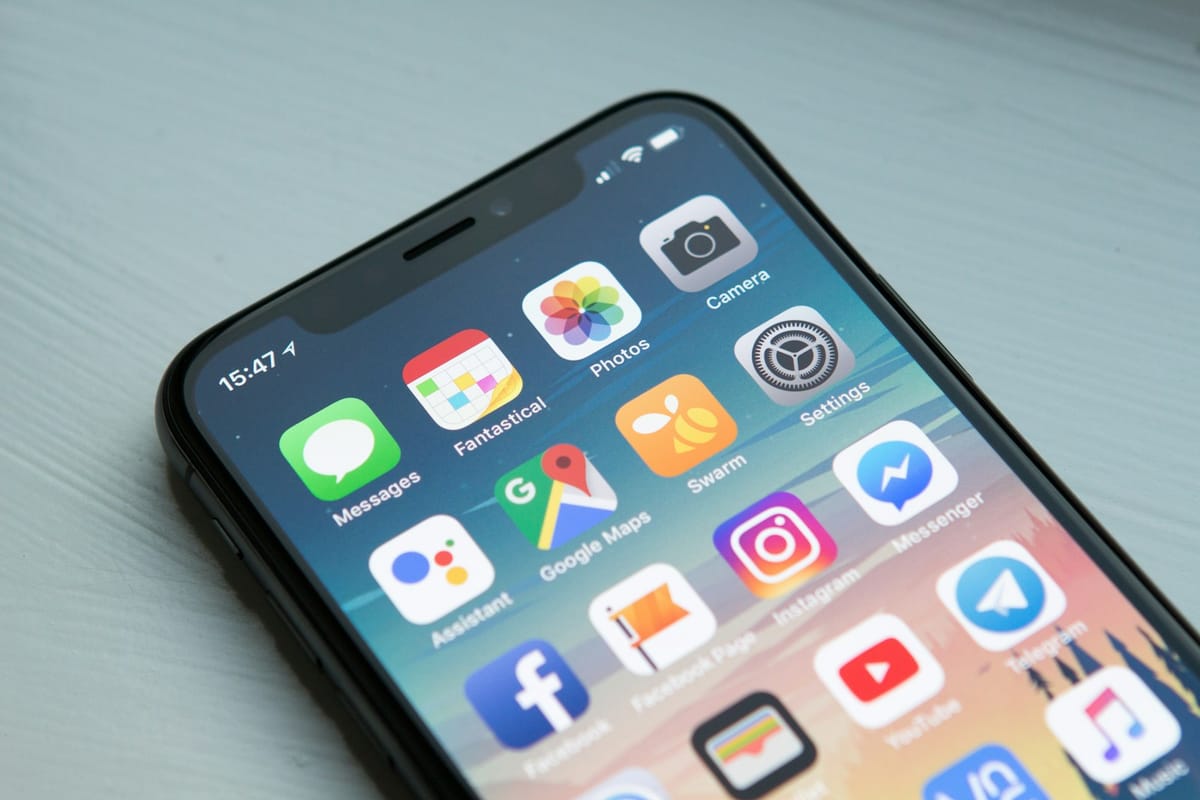
An eSIM is a digital SIM you install by scanning a QR code. It lets you keep your home number on the physical SIM and add a Portuguese number. Check that your phone supports eSIM before you order. DIGI, for example, sells eSIMs. Ask other operators whether their plan is available as an eSIM.
If you use a physical card, ask for one that fits your phone. Current phones use a nano-SIM.
Coverage and speed
Before you commit, check coverage where you live and work. ANACOM's free coverage map, GEO.ANACOM, shows each operator's network. ANACOM's NET.mede lets you test your connection speed at home. Thick walls in older buildings can weaken the signal indoors, so test inside, not only in the street.
If your phone is old, ask the operator whether it works on its network for calls, not only data.
Keeping your number when you switch
Anyone can keep a Portuguese number when they change operator. This is called portability (portabilidade). These rules have applied since 10 November 2025.
- Get your validation code. This is the portability validation code (Código de Validação da Portabilidade, CVP). Monthly customers find it on their bill. Prepaid customers get it by text within 24 hours of activating the service. It is also in your online customer area.
- Talk only to the new operator. Give them the code. They handle everything with your old operator.
- Agree a date. You choose the date with the new operator. The switch must be completed within one working day of that date. If network work is needed, it must be done within one working day after that work.
- Expect a short gap. The switch happens in a window of up to three hours, and you may have no service during it. The new operator must tell you the window 12 hours ahead.
Porting is free. The operators cannot charge you for it.
Prepaid credit. Your old SIM stops working once the number moves, even if it has credit. Ask the old operator to refund the balance. It must pay within 10 working days of your request. It may deduct a charge, if the contract allows it, of no more than €1.
If it goes wrong. You are due €3 per number for each full day of delay. If your service is cut off because of the port, you are due €23 per number for each day, up to €5,750 per request. You get €10 if a booked technician visit is missed through no fault of yours. Compensation should be credited automatically, on your next bill or another direct way, within 30 days. Keep all your paperwork.
Lock-in periods and leaving early
These rules apply to you if you are a consumer signing a contract with a lock-in period.
- The longest lock-in period allowed is 24 months.
- Every operator must also offer plans with no lock-in.
- Operators offering 6, 12, and 24 month options must show the cost and benefit of each.
- Your bill must show when the lock-in ends and what leaving now would cost.
- Before a lock-in ends, the operator must tell you in writing when it ends, how to cancel, and its best prices.
For contracts signed since 14 November 2022, the early exit charge is capped. It is the lower of two amounts. The first is the value of the benefit you received, in proportion to the time left. The second is 50% of the remaining monthly fees in the first year, or 30% in the second year.
If you contracted online or by phone, you can cancel within 14 days without giving a reason. You can also cancel through ANACOM's contract cancellation platform. For the situations that let you leave without paying, read the cancelling guide linked above.
The social internet tariff for low incomes
This tariff applies to you if your household receives certain benefits or has a very low income. It covers internet access only, fixed or mobile. It does not include calls or TV.
What you get: at least 15 GB a month, with speeds of at least 12 Mbps down and 2 Mbps up.
What it costs: €5 a month plus VAT. The operator may charge up to €21.45 plus VAT for activation or equipment, in one go or spread over 6, 12, or 24 months.
Who qualifies:
- people receiving the solidarity supplement for older people (complemento solidário para idosos)
- people receiving social integration income (rendimento social de inserção)
- people receiving unemployment benefit
- people receiving child benefit (abono de família)
- people receiving the social old-age or disability pension, or the disability inclusion benefit
- households with yearly income up to €5,808, plus 50% for each household member with no income, up to 10 people
- some university students living away from home, in a qualifying household
How to apply:
- Ask any operator that offers broadband at your address.
- Give your name, NIF, and tax address.
- ANACOM checks your eligibility with Social Security and the tax authority.
- Once ANACOM confirms, the operator must activate the service within 10 days.
Operators rarely advertise this tariff. Ask for it by name: tarifa social de Internet.
Roaming in Europe and beyond
A Portuguese plan works across the EU, Iceland, Liechtenstein, and Norway, and also in Moldova and Ukraine, at no extra roaming charge. This is "roam like at home". Your operator may set a fair use limit on data, so check your plan.
Outside this area, including the UK, Switzerland, the United States, Brazil, and Cabo Verde, roaming charges depend on your operator. Check your plan or buy a roaming pass in the operator's app before you travel.
If something goes wrong
- Complain to the operator first, in writing, and keep a copy.
- Use the electronic complaints book (Livro de Reclamações) at livroreclamacoes.pt.
- Call ANACOM's free consumer line on 800 206 665, every day from 09:00 to 13:00.
- For disputes over money, go to a consumer arbitration centre. ANACOM's consumer portal has a search for them.
This guide is general information, not legal advice. Prices and rules change; check the official source and the operator's own page before you act.
Sources
This guide is written from official sources and, where relevant, organisations' own websites.
- ANACOM consumer portal, new portability rules (14 November 2025): https://www.anacom-consumidor.pt/-/portabilidade-regras-mais-claras-para-proteger-o-consumidor (rules from 10 November 2025 under ANACOM Regulamento n.º 38/2025: one working day, no charge, CVP code, prepaid refund within 10 working days with a charge of no more than €1, compensation of €3, €23, €5,750, and €10, three-hour window, 12 hours' notice, automatic credit within 30 days, consumer line 800 206 665), checked 1 October 2026
- ANACOM consumer portal, lock-in periods: https://www.anacom-consumidor.pt/faq-periodos-de-fidelizacao (24-month maximum, no-lock-in offers, 6, 12, and 24 month options, bill information, exit charge caps for contracts from 14 November 2022, notice before renewal; Lei n.º 16/2022), checked 1 October 2026
- ANACOM consumer portal, cancelling services: https://www.anacom-consumidor.pt/faq-cancelamento-de-servicos (14-day withdrawal for distance contracts), carried from verified guide W2A-09
- ANACOM consumer portal, social internet tariff: https://www.anacom-consumidor.pt/faq-tarifa-social-de-internet-tsi (€5 plus VAT, €21.45 cap and instalments, 15 GB, 12 and 2 Mbps, eligibility, €5,808 income limit, students, application details, ANACOM checks, 10-day activation, no TV or phone; Decreto-Lei n.º 66/2021), checked 1 October 2026
- ANACOM consumer portal, COM.escolha: https://www.anacom-consumidor.pt/faq-com.escolha (official comparison of telecom plans, prices with VAT), carried from verified guide W2A-09
- ANACOM consumer portal, contract cancellation platform and tools (COM.escolha, NET.mede, arbitration centre search): https://www.anacom-consumidor.pt/plataforma-de-cessacao-de-contratos (cancellation platform), checked 1 October 2026
- ANACOM, GEO.ANACOM coverage map: https://geo.anacom.pt/publico/home (coverage by operator), linked from the ANACOM consumer portal, checked 1 October 2026
- Government of Portugal, Council of Ministers communiqué of 29 May 2026: https://portugal.gov.pt/gc25/governo/comunicados-do-conselho-de-ministros/comunicado-do-conselho-de-ministros-de-29-de-maio-de-2026 (bill to amend the Electronic Communications Law: anti-fraud duties, compulsory ID for prepaid mobile cards), checked 1 October 2026
- European Commission, Your Europe, mobile roaming costs: https://europa.eu/youreurope/citizens/consumers/internet-telecoms/mobile-roaming-costs/index_en.htm (EU, EEA, Moldova, and Ukraine; fair use limits), checked 1 October 2026
- DIGI Portugal, mobile plans: https://www.digi.pt/tarifarios-telemovel/ (DIGI prices, prepaid renewal, eSIM), checked 1 October 2026
- UZO, home page: https://www.uzo.pt/ (UZO monthly prices, no lock-in, €3 discount included), checked 1 October 2026
- UZO, pay-as-you-go plans: https://en.uzo.pt/mobile-plans/pay-as-you-go (weekly prices), checked 1 October 2026
- Livro de Reclamações Eletrónico: https://www.livroreclamacoes.pt/ (complaints)
Last verified October 2026. Rules and fees change; check the official source before acting.