Maria da Graça Carvalho Pre-Announces a Plan to 'Substantially Reduce' Portugal's Fossil-Fuel Dependence — 80.7% Renewables Electricity Already, ZAER the Operative Lever, Heavy Transport, Maritime and Aviation in the Renewable-Liquid-Fuels Channel
Maria da Graça Carvalho says the government will present 'very soon' a plan to substantially reduce Portugal's fossil-fuel dependency. With 80.7% of January electricity already renewable, the gap is transport and industry. ZAER zones are the lever — e-fuels the channel for ships and aviation.
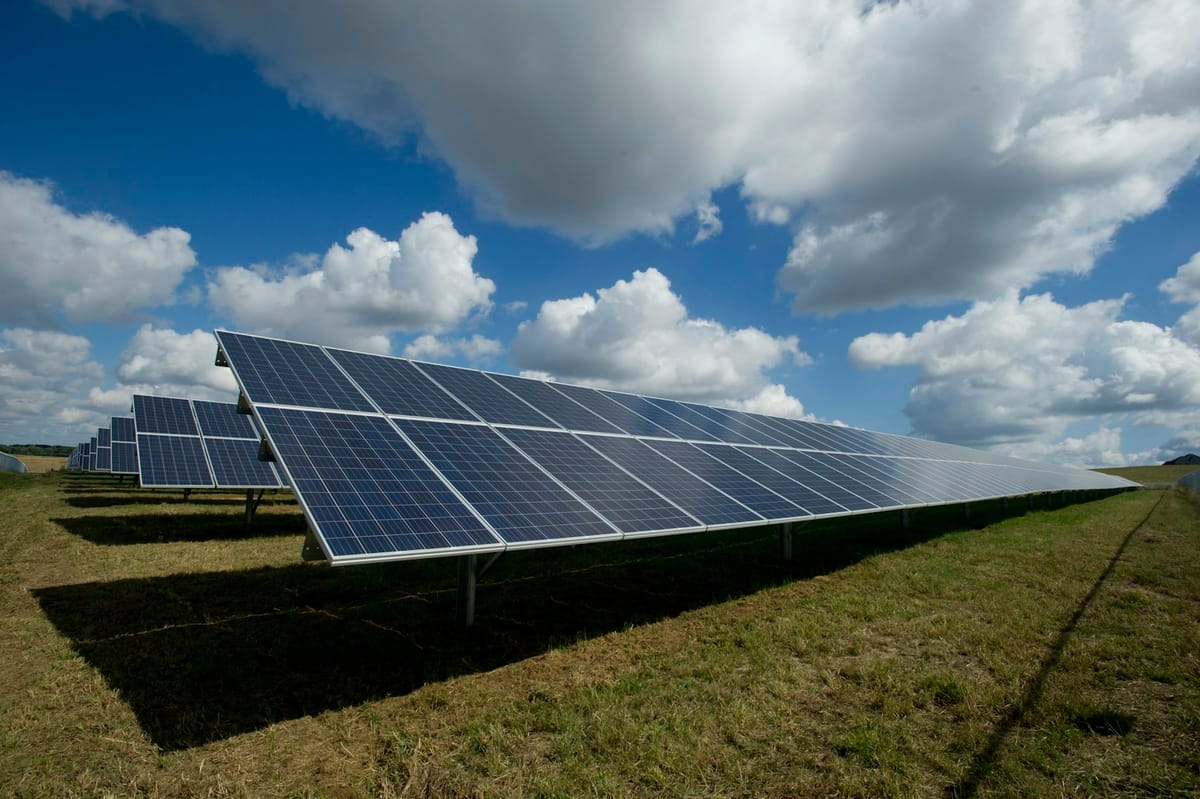
Environment and Energy Minister Maria da Graça Carvalho closed Monday's presentation of the Sectoral Programme for Renewable Energy Acceleration Zones with a line that lands with more weight on Tuesday than it did when it was delivered: the government, she said, is working to present "muito em breve" — very soon — a plan to substantially reduce Portugal's dependence on fossil fuels. The remark was preceded by no headline target and no timeline. It has now been picked up by every major outlet inside 36 hours, and the policy file behind it is suddenly the one to read.
What is already done
The arithmetic is unusually friendly. In January 2026, Portugal generated 80.7% of its electricity from renewable sources. Across the Q1 read, REN's monthly system data shows demand up 3.5% through April, with renewables holding the marginal supply share through a windy spring. The electricity-only file is the one Portugal can almost legitimately point at as a structural decarbonisation success. The fossil-fuel exposure now sits in the two segments that electrification has not yet reached at scale: transport and heavy industry.
What ZAER actually does
The Sectoral Programme for Renewable Energy Acceleration Zones — Programa Sectorial das Zonas de Aceleração de Energia Renovável, ZAER for short — is the operative lever Carvalho keeps returning to. It maps and pre-permits land for solar and onshore wind, transposing the EU's RED III Article 15c framework into the Portuguese spatial-planning code. The premise is that environmental impact assessment becomes a streamlined screening rather than a multi-year licensing odyssey, with grid-connection priority bundled in. Brussels referred Lisbon to the Court of Justice last week for missing the original RED III deadline; the ZAER push is the political answer to that referral as well as a generator-supply lever.
Where the plan has to do real work
The fossil-fuel exposure breakdown forces the agenda. Road transport is the single largest oil-product draw, and Portugal's BEV penetration is climbing — but the heavy-duty fleet, the maritime channel out of Sines/Leixões/Setúbal, and the aviation drag through Lisboa, Porto and Faro are not electrification problems. They are renewable-liquid-fuels problems. Carvalho's framing on Monday named all three sectors and the technology answer — "liquid and gaseous renewables" — without committing to a specific E-SAF, ammonia or hydrogen volumetric mandate. The plan, when it lands, has to commit to one.
Industry sits next. The energy-intensive sub-sectors — paper, cement, glass, ceramics — drove the Q1 industrial rebound INE printed in March. Electrifying those processes is partial and capital-heavy. The realistic decarbonisation lever is on-site renewables, supply contracts indexed to MIBEL renewables, and tariff-side relief through the regulated channel ERSE adjusts twice a year. None of those are headline-friendly. All of them are in the technical chapters of the plan that has not yet been published.
The Iran-channel bracket
The political timing is the cleanest piece. The Hormuz spike has pulled Brent through the OE2026's $80 forecast envelope. Diesel and gasoline 95 went up 10 cêntimos and 6.5 cêntimos respectively at the pump on Monday. Miranda Sarmento confirmed the windfall-tax bill on energy company extraordinary profits the same afternoon. Each of those data points hardens the political case for an autonomy plan. The CFP and the rating agencies are watching the same line: DBRS already warned that a prolonged conflict tips the 2026 surplus into deficit.
What to watch next
First, a published timeline — eight years to halve fossil-fuel dependency would be aggressive but credibly EU-aligned with the 2030 NECP track. Second, sector-specific volumes for renewable-liquid fuels, with a hydrogen vs. e-fuels split. Third, whether the plan reopens the storage-incentive programme that fell out of the PRR reprogramming. The headline announcement is short. The implementing legislation is where the file has to do its real work — and Carvalho's Monday speech is the closest thing to a policy heads-up the energy market has had in months.