LVMH-Backed Fund Buys Sintra's Penha Longa Resort in Push to Build European Luxury Hotel Empire
One of Portugal's most iconic luxury resorts has changed hands, signaling growing confidence among global investors in the country's high-end hospitality market — even as broader tourism trends show signs of cooling. The Penha Longa Resort in Sintra...
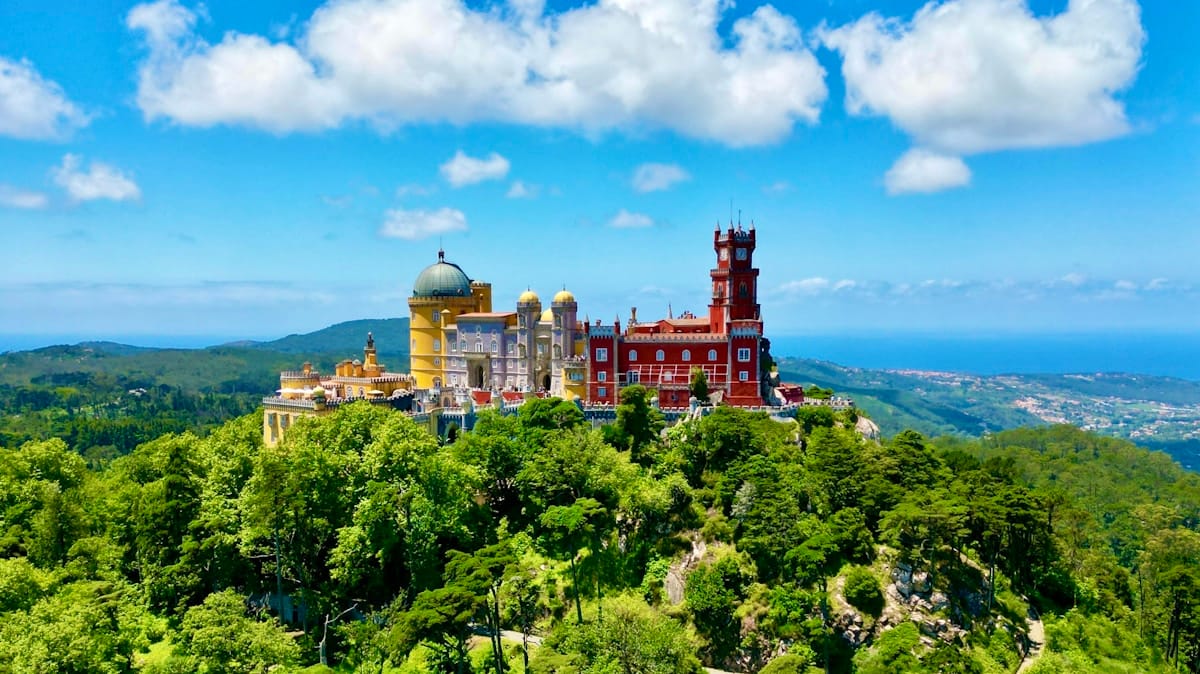
One of Portugal's most iconic luxury resorts has changed hands, signaling growing confidence among global investors in the country's high-end hospitality market — even as broader tourism trends show signs of cooling.
The Penha Longa Resort in Sintra has been acquired by L Catterton Real Estate, an investment vehicle backed by LVMH (the French conglomerate behind Louis Vuitton, Christian Dior, and Moët Hennessy), in partnership with Cedar Capital Partners. The deal marks the joint venture's first foray into Portugal and one of its inaugural acquisitions as it builds what it describes as a "selective portfolio" of ten to fifteen landmark properties across Europe and North America.
Financial terms were not disclosed, but the resort was previously valued at approximately 140 million euros when last sold to U.S. private equity firm Carlyle Group in 2018.
A Trophy Asset in Europe's Luxury Hotel Boom
Penha Longa is no ordinary resort. Set within the UNESCO-protected Sintra-Cascais Natural Park on grounds that once belonged to a 14th-century monastery, the property features 209 rooms, suites, and apartments, a luxury spa, multiple pools and tennis courts, and 27 holes of championship golf designed by Robert Trent Jones Jr.
It also hosts several high-end restaurants, including Michelin-starred dining options, and has become a favored venue for elite gatherings. The European Central Bank holds its annual ECB Forum at Penha Longa, drawing central bank governors and finance ministers from around the world.
For L Catterton and Cedar, the acquisition fits squarely within their stated strategy: "capitalizing on the strong secular growth in global demand for luxury travel and a structural imbalance between supply and demand in the upscale hospitality segment."
In plain terms, wealthy travelers are seeking out unique, high-end experiences — and there simply aren't enough properties of Penha Longa's caliber to meet that demand.
Portugal's Dual Tourism Reality
The timing of the deal is notable. While luxury hospitality continues to attract heavyweight investors, Portugal's broader tourism sector is showing early signs of strain.
Hotel industry groups have reported a "clear slowdown" in tourism growth for 2026, with fewer American and Asian visitors and a fragile boost from Middle Eastern tensions that have diverted travelers from Cyprus, Turkey, and Egypt.
Yet the luxury segment appears insulated from these headwinds. High-net-worth travelers are less sensitive to geopolitical uncertainty and economic volatility, and Portugal's appeal as a safe, scenic, and culturally rich destination remains intact.
For investors like L Catterton — whose parent company LVMH has built an empire on the spending power of the global wealthy — that resilience is precisely the point. Luxury hospitality is counter-cyclical in ways mass tourism is not.
Building a European Platform
The Penha Longa acquisition was announced alongside the purchase of the Garden Beach Hotel, a 177-room beachfront property on the French Riviera. Together, the deals signal L Catterton's ambition to assemble a curated collection of Europe's most distinctive luxury hotels.
Unlike traditional hotel chains, which prioritize scale and brand consistency, this strategy focuses on individuality and exclusivity. Each property is meant to be a destination in its own right — not just a place to sleep, but an experience that justifies premium pricing.
For Portugal, the investment is a vote of confidence in the country's position within the global luxury travel hierarchy. It places Penha Longa alongside properties in the South of France, the Italian Riviera, and other blue-chip European destinations.
What It Means for Sintra and the Broader Market
The sale is unlikely to bring immediate changes for guests or staff. L Catterton and Cedar have emphasized continuity and quality in their approach, and Penha Longa's reputation depends on maintaining the standards that have made it a benchmark in Portuguese hospitality.
But the deal could have ripple effects. If the joint venture succeeds in raising the property's profile further — through renovations, expanded programming, or integration with LVMH's luxury ecosystem — it could drive even more high-spending visitors to the Sintra region.
That would be a boon for local businesses, from Michelin-starred restaurants to boutique wine producers, who benefit from the spending power of ultra-wealthy travelers.
It also reinforces a broader trend: Portugal's appeal to global capital. In recent years, foreign investors have poured money into everything from Lisbon office towers to Algarve golf resorts. The luxury hospitality sector has proven particularly attractive, with buyers drawn by Portugal's political stability, scenic beauty, and relatively affordable (by Western European standards) real estate.
A Bet on Resilience
Ultimately, the Penha Longa deal is a bet that demand for world-class luxury hospitality in Portugal will remain strong regardless of macroeconomic uncertainty. It's a bet that the global wealthy — who can afford 500-euro-per-night rooms and 200-euro tasting menus — will keep coming, even if middle-class tourism softens.
And it's a bet that Portugal, with its combination of natural beauty, cultural heritage, and sophisticated infrastructure, has firmly established itself as a top-tier destination for the world's most discerning travelers.
For now, that bet looks well-placed. The question is whether Portugal can leverage this influx of luxury investment to lift the broader economy — or whether the benefits will remain concentrated in gilded enclaves like Penha Longa, insulated from the pressures facing everyday tourism businesses.
