Lisbon Administrative Court Voids the Montijo Airport Environmental Licence — A Final Legal Full Stop on a Project Ministers Had Already Walked Away From
The Tribunal Administrativo de Círculo de Lisboa has declared the 2020 Environmental Impact Declaration for Montijo airport void, ending a five-year challenge by ClientEarth, SPEA and seven Portuguese NGOs — and sealing the legal grave of a project the government had already abandoned for Alcochete.

The Tribunal Administrativo de Círculo de Lisboa has declared void the Declaração de Impacte Ambiental (DIA) that authorised the construction of Lisbon's new airport at Montijo, Público reported on 23 April. The ruling, handed down last week and revealed on Thursday, closes a legal challenge filed in June 2020 by the British legal NGO ClientEarth together with the Portuguese birding society SPEA — and removes any theoretical possibility that the Montijo option could be revived by a future government.
The court's core finding is technical but consequential. Under Portuguese law, an Environmental Impact Declaration lapses if the underlying project has not advanced to construction within the statutory window — typically four years — and it cannot be silently resurrected when the clock runs out. The DIA in question was issued by the Agência Portuguesa do Ambiente in January 2020; by the time ClientEarth and SPEA filed suit five months later, nothing had been built, and by the time the case was decided, the window had long since expired.
Seven NGOs, one legal theory
ClientEarth and SPEA were joined in the proceedings by Liga para a Protecção da Natureza, ANP/WWF, Zero, Quercus, GEOTA and Fapas, with international supporting briefs from BirdLife Europe and the Royal Society for the Protection of Birds. Their central argument was that the APA had waved through the Montijo project without a compliant appropriate assessment under the EU Birds and Habitats Directives — a mandatory step where the proposed infrastructure sits inside or immediately next to a Natura 2000 site, as Montijo does on the southern shore of the Tejo estuary special protection area.
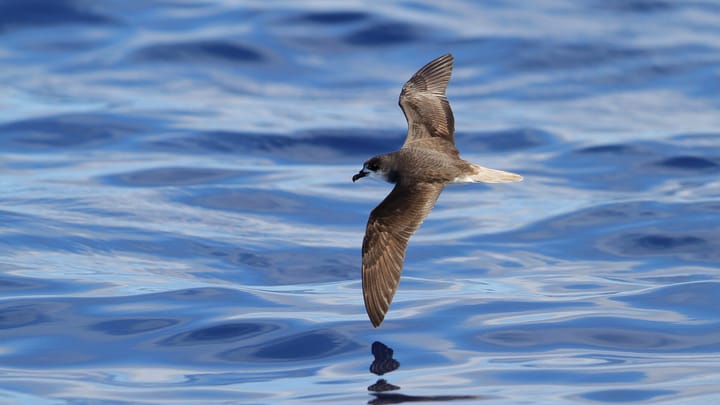
The Tejo estuary is one of the most important wintering and passage sites for migratory waterbirds on the European Atlantic flyway. The coalition argued that the APA's reasoning — that birds displaced by a second airport could relocate to restored habitats nearby — was "incompatible with European law" and "lacked scientific basis". The court did not reach a final view on those substantive points because the expiry finding made them unnecessary, but environmental lawyers involved in the case read the judgement as a warning shot for future DIAs in or near Natura 2000 sites.
Alcochete is untouched — for now
Politically, the ruling lands in a mostly empty room. The Portuguese government had abandoned Montijo as the new airport option back in 2024, accepting the conclusions of the independent Comissão Técnica Independente that Campo de Tiro de Alcochete was environmentally and operationally preferable. Alcochete is now the official site for Luís de Camões Airport, with a planned 2034 opening.
But the Alcochete site is not immune to similar legal scrutiny. It too borders the Tejo estuary protection area, albeit on the opposite shore, and the environmental coalition behind the Montijo case has already warned that any Alcochete DIA will need to meet the standards the tribunal has now implicitly reaffirmed. ANA/Vinci Airports and the Ministry of Infrastructure made no public comment on the ruling.
What Lisbon travellers need to know
For the expat and business-travel public, the ruling changes nothing on the ground. Humberto Delgado Airport remains the sole international gateway to the capital, operating at near-saturation on peak days. The Alcochete timeline is unchanged, and the interim capacity-relief measures — night-flight expansion under negotiation, a second runway extension at Faro, and incremental terminal works at Portela — continue as planned.
The only immediate winner is the Montijo municipal council and the surrounding landowners who had opposed the airport, and the long-running environmental coalition that kept the case alive for nearly six years. The decision is, in theory, still open to appeal — but with no live project to defend, the Ministry of Infrastructure has no reason to carry the file any further.