Government Revives a Minho Rapid-Transit Plan With an €80 Million Metrobus to Link Guimarães and Braga by 2030
The government has approved an €80 million bus rapid transit line to link Guimarães and Braga, reviving a Minho rapid-transit project that fell out of Portugal's EU recovery plan earlier this year. The first phase is due by the end of 2030.
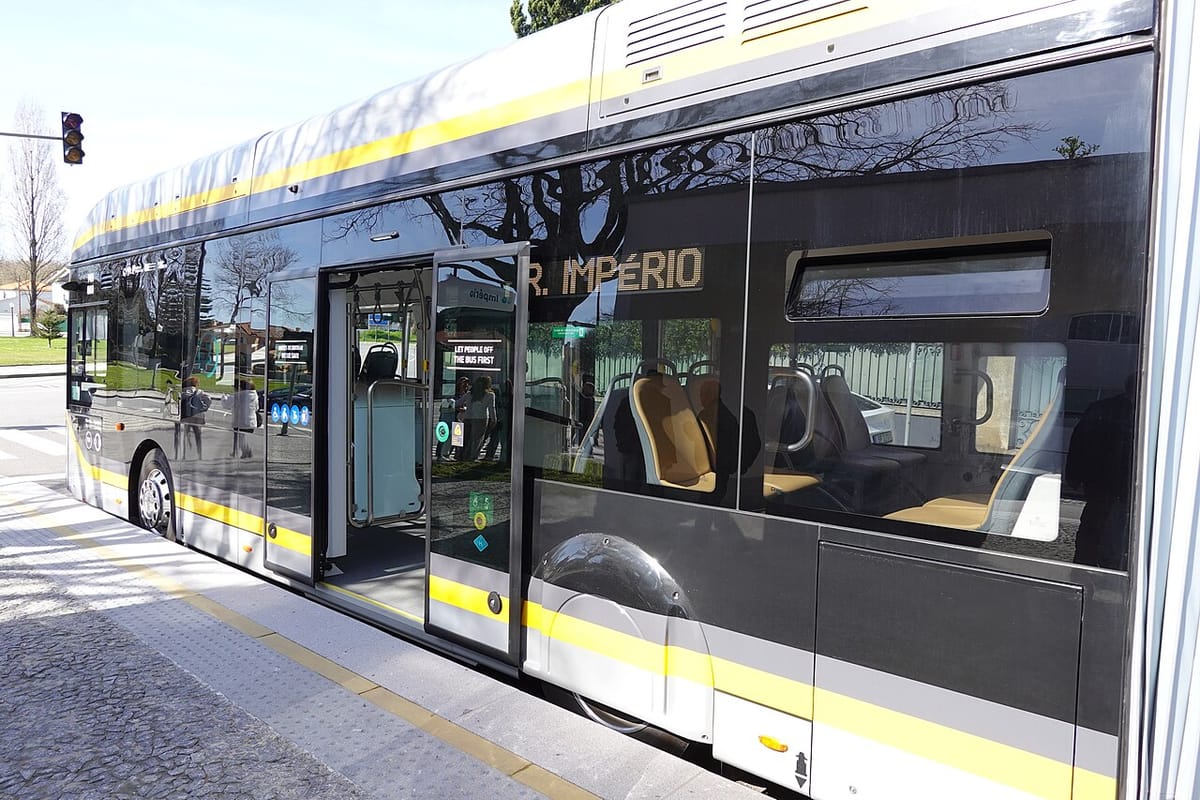
Portugal's government has revived a long-stalled ambition to give the Minho a modern rapid-transit spine, approving an €80 million bus rapid transit line — a metrobus — that will eventually link Guimarães and Braga. The decision was taken at the Conselho de Ministros (Council of Ministers) held in Guimarães on 3 July 2026, and the first stretch is due to be running by the end of 2030.
The move matters because a bus rapid transit scheme for Braga had been one of the marquee casualties of Portugal's Recovery and Resilience Plan (Plano de Recuperação e Resiliência, PRR) reprogramming earlier this year, when roughly €516 million of projects were dropped to meet the plan's August 2026 spending cliff. This new line is being financed outside that framework, with the government guaranteeing the money directly.
What was approved
The resolution greenlights the first phase of the corridor: a bus rapid transit route running from Guimarães to Caldas das Taipas, both within the Guimarães municipality. That opening stage carries the €80 million price tag and the 2030 target. A bus rapid transit system — often shortened to BRT — uses high-capacity electric buses on dedicated lanes with priority at junctions, delivering something close to light-rail frequency and journey times without the cost of laying tram tracks. It is the same model behind the hydrogen-powered Metrobus that entered service in Porto in early 2026.
The Ministro do Ambiente e Energia (Minister for Environment and Energy) signed a protocol releasing an initial €500,000 for the project's design and presentation, on top of an earlier €500,000 tranche — the preparatory spending that precedes the main construction budget.
The second phase — and where it could reach
The connection that gives the line its name, Caldas das Taipas to Braga, is not yet locked in. That second phase remains under negotiation with the municipalities involved, and no completion date has been set for it. Looking further ahead, the government has flagged the possibility of extending the network to take in Vila Nova de Famalicão and Barcelos, which would knit together some of the most densely populated and economically active territory in northern Portugal.
Prime Minister Luís Montenegro framed the investment as a way for residents to move around "in an environmentally sustainable manner, with greater ease and speed" across what he called "one of the country's economically most dynamic regions." He also tied the metrobus to the planned high-speed rail line between Lisbon, Porto and Vigo, which is to include a stop at Braga — positioning the BRT as a local feeder into that future national and cross-border network.
Why the Minho has been waiting
Braga's earlier metrobus plan had been counting on European recovery money, and its removal from the PRR left the region without a funded rapid-transit project at a time when both Braga and Guimarães have been straining under commuter traffic and summer congestion. Guimarães, the medieval city widely described as the birthplace of Portugal, and Braga, one of the country's fastest-growing urban centres, sit close together but have never been joined by a high-frequency public link. Financing the corridor from national funds, rather than waiting for the next EU cycle, is the government's answer to that gap.
What This Means for You
- If you live in or around Guimarães or Braga: a dedicated, electric rapid-transit line is now funded for the first stretch, with construction aimed at completion by 2030 — though the full Guimarães-to-Braga link still depends on a second phase that is not yet agreed.
- If you commute across the Minho: the eventual goal is a faster, lower-emission alternative to driving between two of the north's busiest cities, with possible later extensions toward Famalicão and Barcelos.
- If you follow the high-speed rail project: the metrobus is being designed to feed into the future Lisbon-Porto-Vigo line's Braga stop, so the two projects are meant to reinforce each other.
- Timeline caution: only phase one is financed and dated. Portuguese transport megaprojects have a long history of slippage, so treat 2030 as a target rather than a guarantee.
For a region that watched its rapid-transit hopes fall out of the recovery plan just months ago, the restart is a notable turn — even if the line that gives the project its purpose, the one actually reaching Braga, is still a negotiation rather than a commitment. On the Porto transport file, our report on Porto's mayor setting a 31 December limit for the second phase of the metrobus and naming the contractor as the reason the works on Avenida da Boavista are running late sets the latest reference. On what comes next for surface transport in eastern Lisbon, the consultation on Lisbon's 16E fast tram, and the two prices Carris quotes for it sets out the eleven-kilometre line from the Praça do Comércio to the Parque Tejo, the five route options in the environmental impact study, the tree transplants and lost parking the study concedes, and the 23 million euro gap between the two investment figures on the operator's own website.