Government Concedes Only 16% of Its 84 Brussels-Pledged Reforms Are Complete — 13 Done, 8 Delayed and the Rest 'In Progress' as the European Semester Evaluation Approaches in June
The Government's progress report to Brussels lands a 16% completion rate on the 84 reform measures pledged under the European Semester — 13 finished, 8 delayed and the rest in progress. June's Commission evaluation will be the first hard policy-execution scorecard.
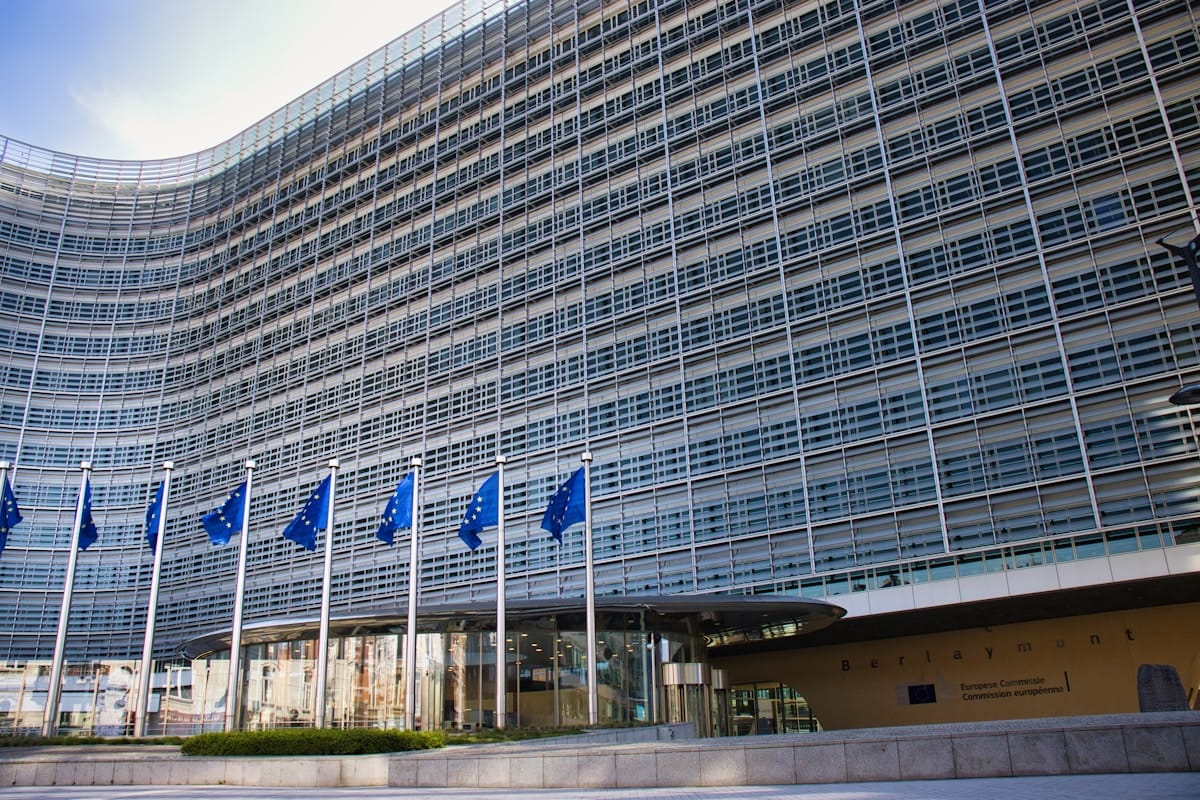
The Portuguese government has filed its annual progress report to the European Commission under the European Semester framework — and the headline number is uncomfortable: of the 84 reform measures the executive had committed to deliver under the country-specific recommendations cycle, only 13 are formally complete. That is a 16% completion rate. A further eight are flagged as delayed; one is pending implementation; and the remaining 60-plus are described as 'in progress'. The Commission's evaluation of the report is scheduled for June 2026.
The Reform Universe
The 84 measures cover the full sweep of Brussels-driven priorities under the post-2019 European Semester — fiscal sustainability, labour-market activation, housing supply and rental regulation, energy transition, digital public administration, justice-system efficiency, and the financial-supervision regime. The Commission tracks them through the annual country-specific recommendations (CSRs), and Portugal's executive submits a self-assessment ahead of each summer's evaluation cycle.
The 16% completion rate is a deliberate honesty signal. The previous administration's own self-assessments routinely landed in the 30-45% complete range; the lower headline number from the current Montenegro executive reflects a tightening of what 'complete' is allowed to mean in the report — closer to the Commission's own definition of 'fully implemented and operationally measurable' rather than the looser earlier reading of 'legislated and partially in force'.
What Is Done
The 13 completed measures span across:
- The full nationality-law reform, promulgated and in force from 4 May 2026.
- The European-deposit-guarantee mechanism alignment on Portuguese-bank protocol.
- The collective-bargaining coverage extension in line with the new Labour Pact.
- The Compete 2030 reprogramming on innovation and SME support.
- The siresp modernisation framework and the new ZAER renewable licensing channel.
- The fiscal-rules-compliance protocol reaffirmed at end-April for 2024 and 2025.
These represent the substantive deliverables the executive can point to in front of the Commission's June panel.
What Is Delayed
The eight delayed measures are the more politically sensitive list:
- Fossil-fuel-subsidy elimination — Brussels wanted Portugal to phase out the fossil-fuel-subsidy framework by 2030; the most recent 1.5 cêntimo ISP discount on diesel through Portaria 204-B/2026 illustrates the policy gap.
- Housing-rental-market structural reform — the Mais Habitação package is still partially in implementation and Brussels' rental-control recommendation has not been operationalised.
- Justice-system performance metrics — backlog reduction targets at first-instance courts continue to slip.
- Pension-system long-term sustainability — the multiannual fiscal projection released by CFP last week describes the trajectory as 'inconsistent with current commitments'.
- Public-procurement digitalisation — the e-tender platform refresh is in beta and not yet deployed at scale.
- Healthcare-workforce strategic plan — the long-promised Pacto Estratégico para a Saúde remains under negotiation.
- Skills-mismatch programmes — vocational-training reforms have not yet shifted measurable outcomes on youth precariousness.
- Anti-money-laundering supervisory architecture — the integration with the new EU AMLA framework continues to slip on calendar.
The Strategic Read
The 16% completion rate is the operative number, but the more telling figure is the eight delayed measures and their composition. Five of the eight sit in policy areas where Portuguese politics has structural blockers: fossil-fuel-subsidy reform, rental regulation, pension sustainability, healthcare-workforce architecture and justice-system metrics. These are the same five files that have produced the most consistent Commission criticism in successive country-specific recommendation cycles.
The Government's reading is that the June evaluation will be a tougher conversation than the spring 2025 one, but that the executive's fiscal-credibility position — Portugal's deficit and debt trajectory remains comfortably inside the new EU spending-rule framework — buys it political headroom to slow-walk reforms in the structural-policy areas. Whether the Commission accepts that political-economy trade-off is the open question.
What This Means for Expats
- The 16% number tells you which side of the executive's policy stack is moving and which is not. If your relocation or business decision depends on a structural-reform completion — for example, a clearer rental-regulation regime, a faster justice-system, or a more predictable healthcare-workforce stack — assume the multiyear deferral is the working baseline.
- The completed measures do affect direct expat planning. The nationality-law promulgation, the Compete 2030 reprogramming, and the ZAER renewable-licensing channel are all live and operationally relevant for foreign-resident decisions.
- The June evaluation matters for sovereign-credit narratives. A weaker-than-expected Commission read could nudge Portuguese spreads on the OT curve and, indirectly, mortgage-pricing assumptions; if you are planning a property purchase in the second half of 2026, watch the late-June Commission communication.
- Eight known-delayed reforms are eight known-baseline-conditions. Don't plan on any of the eight delayed files being substantially closed before late 2027 at earliest — and for fossil-fuel-subsidy reform and rental-market regulation, the realistic horizon is the next legislature.