Good Friday in Braga: Portugal's Ancient Holy Week Draws Thousands as Easter Tourism Surges 14 Percent
As Portugal pauses for Good Friday — a national public holiday — the ancient city of Braga is once again the spiritual centre of the country's Easter celebrations, drawing tens of thousands of visitors to processions that date back centuries. This...
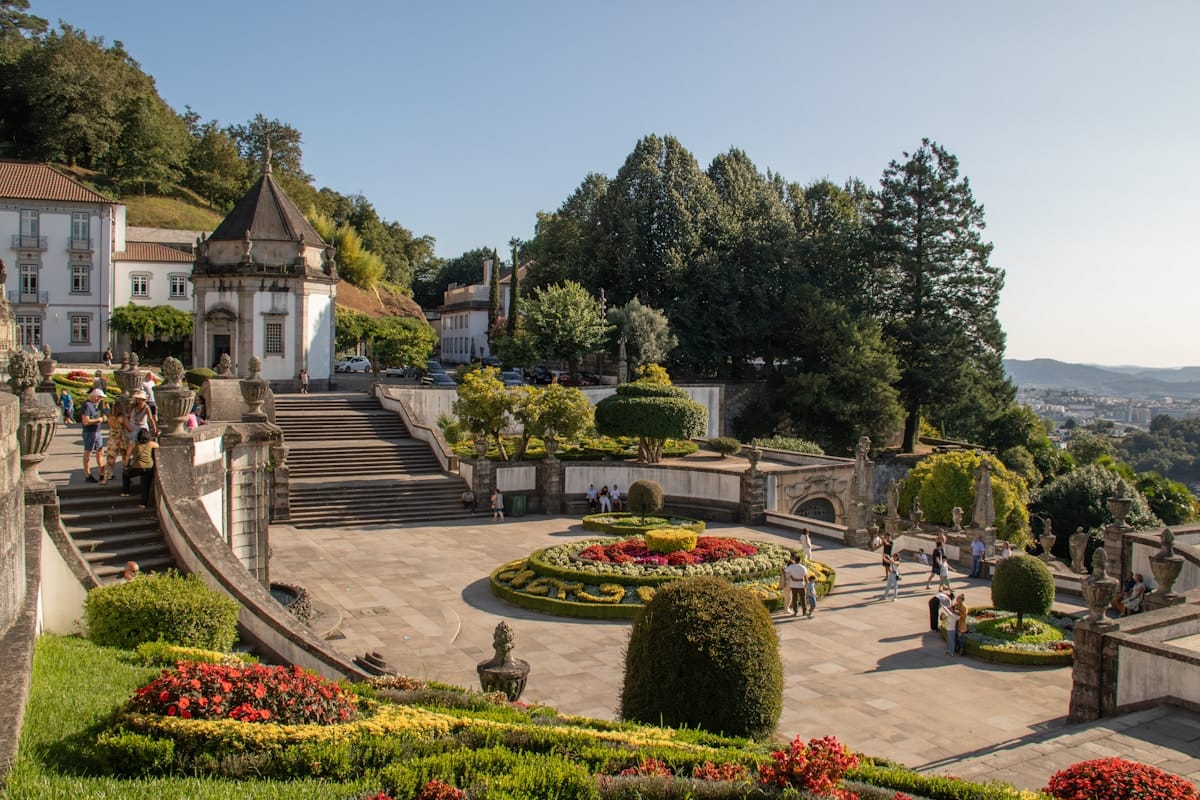
As Portugal pauses for Good Friday — a national public holiday — the ancient city of Braga is once again the spiritual centre of the country's Easter celebrations, drawing tens of thousands of visitors to processions that date back centuries. This year, the crowds are larger than usual: hotel bookings across Portugal are up 13.9 percent year-on-year, driven partly by the country's emerging reputation as a safe, stable destination in a turbulent world.
The Portuguese Rome
Braga, known as the "city of archbishops" and sometimes called the "Portuguese Rome," has hosted Holy Week celebrations since at least the 16th century. The Semana Santa traditions here are among the oldest and most elaborate on the Iberian Peninsula, rivalling those of Seville and Valladolid across the border in Spain.
Today's programme centres on the Procession of the Burial of the Lord (Procissao do Enterro do Senhor), which winds through Braga's historic streets after dark. Hundreds of barefoot penitents carry torches alongside ornate floats depicting scenes from the Passion. The silence of the crowds — broken only by prayers, hymns, and the shuffle of feet on cobblestone — creates an atmosphere that visitors describe as profoundly moving.
Earlier in the week, Palm Sunday's procession from the Seminary Church to the Cathedral of Braga drew thousands to witness the blessing of palm branches, followed by the Procession of the Steps (Procissao dos Passos), which recreated Christ carrying the cross through narrow streets lined with solemn figures including Mary Magdalene and Roman soldiers.
Beyond Braga
While Braga commands the most attention, Holy Week celebrations unfold across Portugal. Obidos, on the Silver Coast, stages its own atmospheric Semana Santa that attracts thousands of visitors to the medieval walled town. In the Algarve, Loule and Tavira host smaller but deeply traditional processions. Porto's Way of the Cross reenactment traces a route through the city's Ribeira district.
For expats experiencing their first Portuguese Easter, the long weekend can come with surprises. Most shops, supermarkets, and public services close on Good Friday, and many businesses won't reopen until Tuesday. AIMA offices, Financas, and other government services are shut. Public transport runs on reduced holiday schedules — worth checking in advance if you're planning travel.
Safe Haven Tourism
Portugal's Easter tourism boom is part of a broader trend. With the Middle East conflict disrupting travel patterns and geopolitical uncertainty dampening appetite for destinations further afield, Portugal has positioned itself as what industry analysts are calling a "safe haven" for international travellers.
Hotel occupancy rates in Lisbon and the Algarve have climbed above 80 percent for the Easter period, with strong demand from American, Canadian, and northern European visitors. The Bank of Portugal's latest tourism data shows the sector added 18 percent more jobs in the past year, suggesting the industry's resilience is filtering into the broader economy even as other sectors cool.
The timing is fortuitous for a country that had been bracing for a tourism slowdown amid rising energy costs and inflation hitting 2.7 percent. Instead, the combination of relative political stability, competitive pricing compared to northern Europe, and world-class cultural offerings has kept visitor numbers climbing.
A Long Weekend to Remember
For those spending Good Friday in Portugal, beyond the processions there are culinary traditions worth seeking out. Bacalhau (salted cod) is the centrepiece of the Easter table — by tradition, meat is avoided on Good Friday. Folar de Pascoa, a sweet or savoury Easter bread that varies by region, appears in bakeries across the country. In the north, it often contains cured meats baked into the dough; in the south, it tends sweet, with cinnamon and lemon zest.
Portugal's stock exchange is closed today for the Good Friday holiday and will not reopen until Monday. The long weekend offers a rare moment of quiet in what has been a turbulent start to 2026 — and a reminder that in a country with centuries of tradition, some things endure regardless of what the markets are doing.