General Daily Briefing — Tuesday, 23 June 2026
The latest Portugal news, analysis, and what it means for expats and residents.

Becoming a Tax Resident in Portugal in 2026 — A Practical Guide to the 183-Day Rule, the Tax Domicile (Domicílio Fiscal), Double-Tax Treaty Tie-Breakers and the Tax Residency Certificate (Certificado de Residência Fiscal)
How you actually become a tax resident of Portugal: the 183-day rule, the habitual-home test, part-year residency, why domicílio fiscal is not the same thing, double-tax-treaty tie-breakers and how to get a certificado de residência fiscal.
Setting Up Your Household Electricity and Gas in Portugal in 2026 — A Practical Guide to the Free Market, Contracted Power, the Social Tariff, Switching Suppliers and the New Consumer Protections
Connecting the power and gas in a Portuguese home means navigating the liberalised market, sizing your contracted power in kVA, choosing fixed or indexed tariffs, and knowing your rights on the social tariff and switching. This guide walks…
📋 In This Edition
- National Cybersecurity Centre Switches On Portugal's NIS2 Registration and Incident-Reporting Rulebook
- Left Bloc Accuses Parliament's Speaker of Tilting the Constitutional-Revision Clock Toward a PSD–Chega Pact
- Portugal's Total Debt Load Swells €8.1 Billion in April to €876.2 Billion, Bank of Portugal Reports
- Registered Jobless Roll Shrinks to 274,766 in May, Down 8.7% on the Year
- Government Shifts the Asbestos-Waste Burden onto Town Halls as Specialists Point to Enforcement Gaps
- Religious Freedom Law Turns 25 as Its Architect Sounds the Alarm Over Discrimination
National Cybersecurity Centre Switches On Portugal's NIS2 Registration and Incident-Reporting Rulebook
Portugal's Centro Nacional de Cibersegurança (National Cybersecurity Centre, CNCS) has published Regulamento n.º 756/2026 (Regulation 756/2026) in the Diário da República (Official Journal), with its core provisions taking effect on 23 June. The rules operationalise the NIS2-based Legal Framework for Cybersecurity, creating a central CNCS platform where essential, important and relevant public entities must self-identify, appoint a cybersecurity officer and report incidents. Organisations are sorted into basic, substantial or elevated conformity tiers, each with its own minimum security measures.
Left Bloc Accuses Parliament's Speaker of Tilting the Constitutional-Revision Clock Toward a PSD–Chega Pact
Bloco de Esquerda (Left Bloc) leader José Manuel Pureza accused Assembly President José Pedro Aguiar-Branco of a "truque político" (political trick) that, he says, objectively favours an understanding between Chega and the Partido Social Democrata (PSD) on the constitutional revision. The speaker had returned Chega's already-submitted revision project after a joint PSD–Chega request to extend the deadline for tabling projects to 30 December 2026. Because any revision needs a two-thirds majority, control of the timetable carries weight well beyond the procedural detail.
Portugal's Total Debt Load Swells €8.1 Billion in April to €876.2 Billion, Bank of Portugal Reports
The total indebtedness of the Portuguese economy reached €876.2 billion in April, up €8.1 billion on March, according to the Banco de Portugal (Bank of Portugal). The public sector drove the rise with a €5.5 billion increase — €3.7 billion of it from external financing — while private-sector debt grew €2.6 billion. Household debt rose €1.3 billion, led by roughly €1 billion in fresh mortgage credit against a backdrop of constrained housing supply.
Registered Jobless Roll Shrinks to 274,766 in May, Down 8.7% on the Year
The Instituto do Emprego e Formação Profissional (Institute for Employment and Vocational Training, IEFP) counted 274,766 registered unemployed in May, down 26,139 people (-8.7%) year-on-year and -3.0% on April. The North, Azores and Madeira led the annual declines, while the Algarve fell sharpest month-on-month on seasonal tourism hiring. A cautionary note sits beneath the headline: workers on suspended contracts jumped 43.1% over the year, even as reduced-hours cases fell.
Government Shifts the Asbestos-Waste Burden onto Town Halls as Specialists Point to Enforcement Gaps
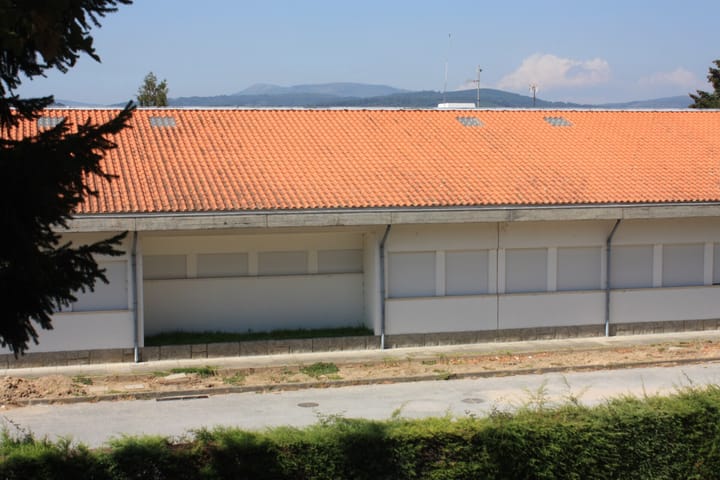
An amendment to the Regime Geral de Gestão de Resíduos (General Waste Management Regime), approved by the Conselho de Ministros (Council of Ministers) in May, makes municipal systems responsible for amianto (asbestos) waste from small private works. Specialists welcome the clarity but say little changes in practice: there is still no mandatory pre-works asbestos survey for homes, weak inspection and poor traceability. Asbestos, banned for over two decades, persists in older Portuguese roofs, tiles and fibre-cement cisterns.
Religious Freedom Law Turns 25 as Its Architect Sounds the Alarm Over Discrimination
As Portugal's Lei da Liberdade Religiosa (Religious Freedom Law) marks its 25th anniversary on 24 June with a ceremony at the Palácio de Belém (Presidential Palace), its author Vera Jardim warned of a rise in religious-discrimination cases. He cited antisemitic graffiti on a Lisbon synagogue, hostility toward Muslim practices, and discrimination against immigrants of other faiths, arguing that some politicians wield "religião como uma arma política" (religion as a political weapon). Jardim stressed there is no persecution in Portugal and that the remedy lies in education, not prohibition.