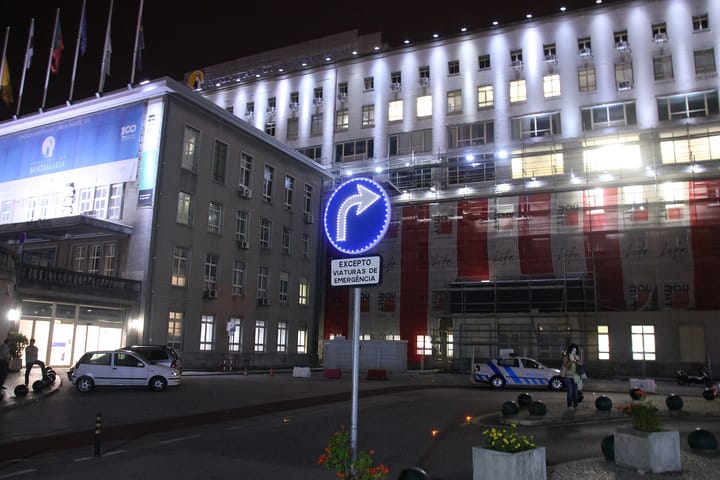
Fourteen Greater Lisbon Mayors Unite in Fight Against Emergency Room Closures
Fourteen mayors from across Greater Lisbon have joined forces to wage a coordinated battle against the closure and restriction of hospital emergency departments in their municipalities. The unprecedented show of cross-party local government...
Fourteen mayors from across Greater Lisbon have joined forces to wage a coordinated battle against the closure and restriction of hospital emergency departments in their municipalities. The unprecedented show of cross-party local government solidarity signals growing alarm about the state of healthcare access in Portugal's most densely populated region, home to nearly three million people including a large concentration of foreign residents.
A Shared Problem
The meeting, reported by Diario de Noticias, saw mayors from municipalities spanning the political spectrum agree on a joint strategy to resist what they describe as a pattern of emergency room closures driven by staffing shortages rather than strategic planning. Across the Lisbon metropolitan area, several hospitals have been forced to close or restrict emergency services intermittently, particularly overnight and on weekends, due to a chronic shortage of emergency physicians.
The closures have created a domino effect. When one hospital shuts its emergency department, patients are redirected to neighbouring facilities, which in turn face overcrowding and longer wait times. In some cases, ambulances have been forced to travel significantly further, raising concerns about response times for time-sensitive emergencies such as strokes and heart attacks.
Why It Matters
Portugal's healthcare system operates through the Servico Nacional de Saude (SNS), which provides universal coverage to residents, including registered foreign nationals. For expats and immigrants, emergency departments often serve as the first point of contact with the healthcare system, particularly for those who have not yet secured a regular family doctor through their local health centre.
The emergency room closures disproportionately affect areas with high concentrations of immigrant communities, including parts of the Lisbon periphery where many Brazilian, Nepalese, Bangladeshi, and other foreign residents live. Language barriers and unfamiliarity with the system can make it especially difficult for recent arrivals to navigate alternative care pathways when their nearest emergency department is closed.
The Root Cause
The mayors' frustration is directed less at individual hospitals than at a systemic failure to attract and retain emergency medicine physicians within the SNS. Portugal trains a significant number of doctors, but many choose to specialise in fields other than emergency medicine, which is characterised by gruelling schedules, high stress, and comparatively modest pay within the public system. Others emigrate to countries offering better conditions.
The government has taken steps to address the shortage, including financial incentives for doctors willing to work emergency shifts and expanded training programmes. But the mayors argue that these measures have been insufficient and that the problem requires a more fundamental restructuring of how emergency care is organised and funded in metropolitan areas.
What the Mayors Want
The joint initiative calls for several measures. First, greater transparency from hospital administrations about planned closures, with advance notice to municipalities and residents. Second, a regional coordination mechanism that ensures no part of the metropolitan area is left without accessible emergency care. Third, increased central government investment in emergency medicine staffing, including higher pay and improved working conditions for emergency physicians.
The mayors have also raised the possibility of legal action if closures continue without adequate consultation or contingency planning. While municipalities do not directly manage hospitals, they argue that as elected representatives of the affected populations, they have a legitimate role in demanding accountability from the national health service.
Looking Ahead
The joint statement represents a rare moment of political unity in Portuguese local government. Whether it translates into concrete policy changes will depend on the response from the Ministry of Health and the willingness of the Montenegro government to prioritise emergency care reform. For residents of Greater Lisbon, the immediate advice remains the same: check the SNS 24 hotline (808 24 24 24) before visiting an emergency department to confirm availability, and register with a local health centre to secure access to primary care and reduce reliance on emergency services.
Background: See the STTS national health-sector strike on 4-5 May. On who pays when a non-resident walks into a Portuguese emergency department, what the health inspectorate wants to change about paying for emergency care sets out the IGAS recommendations on charging at the door, the 2024 survey that found 92,189 non-residents treated in nine months with 49.3 percent carrying no cover, and the 115, 88 and 52 euro tariffs fixed by Portaria n.º 274/2026/1.