Driving in Portugal: A Complete Guide to Licenses, Tolls, Rules, and What Foreigners Need to Know in 2026
Portugal's roads can be a joy to drive—winding coastal routes, modern highways, and charming village streets. But before you get behind the wheel, there are rules, documents, and systems you need to understand. From driving licenses to tolls,...

Portugal's roads can be a joy to drive—winding coastal routes, modern highways, and charming village streets. But before you get behind the wheel, there are rules, documents, and systems you need to understand. From driving licenses to tolls, insurance to traffic laws, here's what foreign residents and visitors need to know about driving in Portugal in 2026.
Can You Use Your Foreign Driving License?
Short answer: Yes, but with limits.
Tourists and Short-Term Visitors
If you're visiting Portugal as a tourist, you can drive with a valid license from your home country for up to 185 days (roughly six months). If your license is not in Portuguese or another EU language, you should carry an International Driving Permit (IDP) alongside your original license.
The IDP is a translation document—not a standalone license—and must always be presented with your original.
New Residents (EU/EEA/Swiss Licenses)
If you hold a driving license from an EU, EEA, or Swiss country, you can continue using it indefinitely in Portugal. You're not required to exchange it for a Portuguese carta de condução (driving license).
However, if you want to exchange it voluntarily—or if your original license expires—you can do so at the IMT (Instituto da Mobilidade e dos Transportes).
New Residents (Non-EU Licenses)
If you're from outside the EU/EEA and become a legal resident in Portugal, the rules depend on whether your country has a reciprocity agreement with Portugal.
Countries with reciprocity (partial list):
- United States (varies by state; most states are covered)
- Canada (varies by province)
- Brazil
- South Africa
- Japan
- South Korea
- Australia
If your country has an agreement, you can exchange your license for a Portuguese one without retaking a driving test. You typically have two years from the date you register as a resident to complete the exchange.
If your country does not have a reciprocity agreement, you'll need to take the Portuguese driving theory and practical exams.
Where to exchange: IMT offices or online via the IMT Portal. You'll need your foreign license, proof of residency (e.g., atestado de residência), NIF, and medical certificate.
Cost: Around €30–50, plus the medical exam fee.
Understanding Portugal's Toll System
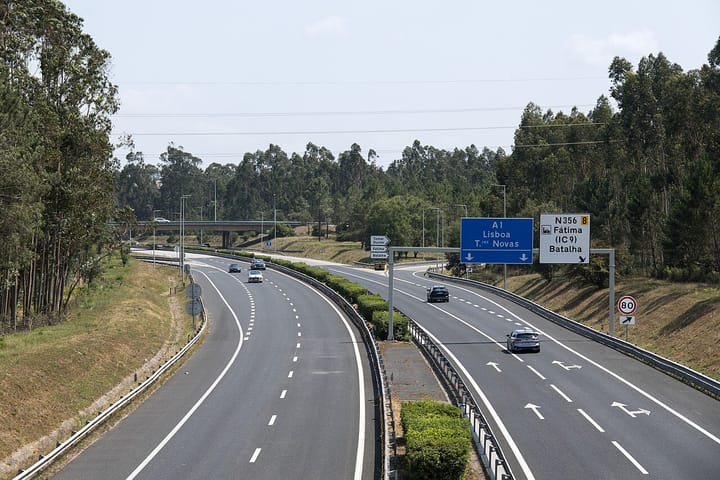
Portugal's toll roads (portagens) can be confusing for first-timers, especially because many highways have no physical toll booths—just overhead gantries that scan your license plate.
Types of Toll Roads
- Manual tolls: Traditional booths where you stop and pay cash or card. Found on older stretches of the A1, A2, and other major motorways.
- Electronic-only tolls: No booths. Cameras read your plate. Common on the A22 (Algarve), A23, A24, A25, A28, and parts of the A1.
- SCUT roads: Some highways used to be toll-free (ex-SCUT), but tolls were reintroduced in recent years.
How to Pay Electronic Tolls
If you're driving a rental car, the rental company usually offers a toll device or service—read your contract carefully, as fees can add up.
If you're driving your own car (or a foreign-registered car), you have several options:
1. Via Verde (most common)
An electronic transponder you stick to your windshield. It automatically charges tolls to your linked bank account or credit card. Costs around €7/month plus toll charges. Sign up at CTT post offices, Via Verde shops, or online.
2. Easytoll (for foreign-registered cars)
Link your foreign license plate to a credit card at border crossing kiosks or online. Valid for 30 days, renewable.
3. Post-payment at CTT
You can pay tolls after the fact at CTT post offices within a few days of using the road. You'll need your license plate number and the date/time you crossed the gantry.
Warning: If you don't pay within the deadline (usually 5 days), you risk fines starting at €25, escalating to over €600 if ignored.
In 2026, the government introduced toll exemptions on the A2 (Lisbon–Algarve) and A6 (Lisbon–Spanish border) for registered residents of certain municipalities. Check the IMT or Infrastructure Ministry website for eligibility.
Fuel and Fuel Prices
Portugal has extensive petrol station coverage, but prices are among the highest in Europe. As of early 2026:
- Gasoline (gasolina 95): Around €1.85–2.10/liter
- Diesel (gasóleo): Around €1.75–2.05/liter
Prices fluctuate with global oil markets and government fuel tax adjustments. You'll find cheaper fuel at hypermarket stations (Continente, Pingo Doce, Intermarché) and unbranded stations.
Most stations are self-service. Payment by card is standard.
Insurance: What You Need
Mandatory: Third-party liability insurance (seguro contra terceiros) is required by law. It covers damage you cause to others, but not to your own vehicle.
Optional but recommended:
- Comprehensive insurance (seguro contra todos os riscos): Covers your own car in accidents, theft, fire, etc.
- Roadside assistance (assistência em viagem)
If you're importing a car from abroad, you must register it with the IMT and obtain Portuguese insurance. Foreign insurance is valid for temporary visits but not for residents.
Cost: Varies widely based on age, driving history, and car value. Expect €300–800/year for basic coverage.
Uninsured drivers: Portugal has seen a surge in uninsured drivers in recent years, putting pressure on the National Guarantee Fund, which compensates victims of uninsured accidents.
Key Road Rules and Etiquette
- Drive on the right, overtake on the left.
- Speed limits:
- Urban areas: 50 km/h
- Rural roads: 90 km/h
- Motorways: 120 km/h
- Some motorways have lower limits (100 km/h) in certain sections.
- Seatbelts: Mandatory for all passengers.
- Child seats: Required for children under 12 or shorter than 135 cm.
- Mobile phones: Hands-free only. Fines start at €120.
- Alcohol limit: 0.5 g/L blood alcohol (0.2 g/L for drivers with less than 3 years' experience). Fines and license suspension apply.
- Roundabouts: Traffic already in the roundabout has right of way. Signal when exiting.
- Pedestrian crossings: You must stop for pedestrians waiting to cross.
Parking:
- Blue zones require payment (meters or apps like Via Verde Estacionar, EMPARK).
- Yellow curbs = no parking.
- White curbs = free parking (often time-limited).
Portugal uses speed cameras extensively, and fines are issued automatically by mail.
New Safety Rules (July 2026)
Starting July 2026, all new cars sold in Portugal (and the EU) must include advanced safety features:
- Intelligent speed assistance (ISA)
- Alcohol interlock installation readiness
- Drowsiness and attention warning
- Advanced emergency braking
- Event data recorders ("black boxes")
These won't affect used cars or vehicles already on the road.
Importing and Registering a Car
If you're moving to Portugal and bringing a car, you'll need to:
1. Pay ISV (vehicle tax) based on engine size, emissions, and age. This can be significant—sometimes thousands of euros.
2. Register the car with the IMT.
3. Obtain Portuguese license plates.
4. Pass a technical inspection (inspeção).
Many expats find it easier to buy a car in Portugal than to import one due to ISV costs.
Practical Tips
- Get a Via Verde transponder if you plan to use motorways regularly.
- Download parking apps (Via Verde Estacionar, EMPARK, Parkopedia).
- Carry your documents: License, registration (DUA), insurance certificate, and ID. Police can request these at any time.
- Be patient with drivers: Portuguese drivers can be aggressive, especially in Lisbon and Porto. Defensive driving is key.
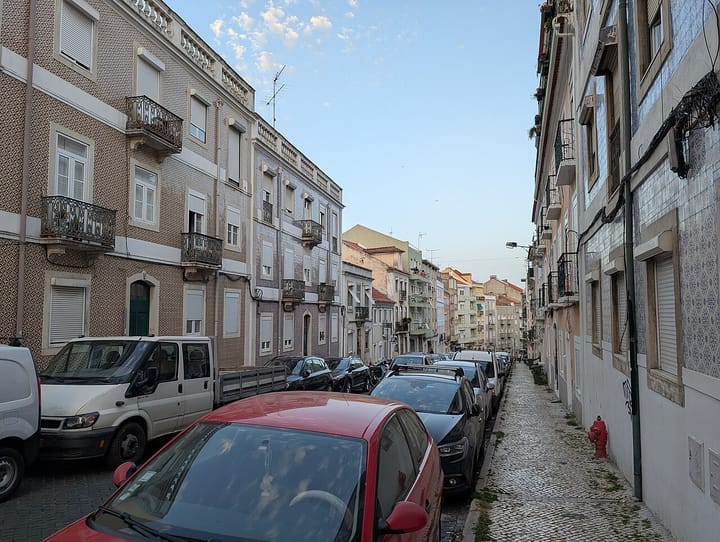
- Watch for cobblestones: Many old town centers have slippery, uneven cobbled streets. Drive slowly.
Portugal's road network is modern and well-maintained, and with a little preparation, driving here can be smooth and enjoyable. Just make sure your documents are in order, you understand the toll system, and you respect the local rules.
Further Reading
If you're new to Portugal, you may also find these guides helpful:
- The Complete Guide to Moving to Portugal (2026)
- Buying Property in Portugal as a Foreigner (2026)
- Healthcare in Portugal 2026: Complete Guide for Expats
- Retiring in Portugal 2026: Complete Guide
Related reading: Paying Traffic Fines in Portugal 2026: ANSR Notifications, the 15-Day Voluntary Window, and How to Defend