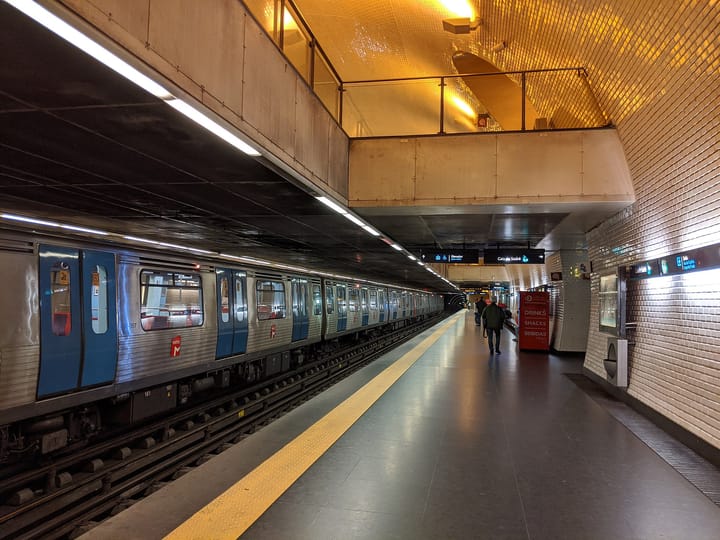
CP More Than Doubles Its 2025 Profit to €4.8 Million on a Record 208 Million Passengers — Comboios de Portugal Exits the General Government Sector and Will Gain Procurement Autonomy in 2027
Comboios de Portugal closed 2025 with a €4.8M profit — up 166% — on 208M passengers, helped by the €20 Passe Ferroviário Verde. INE has now removed CP from the general government institutional sector register, which from 2027 will hand the operator full management and procurement autonomy.
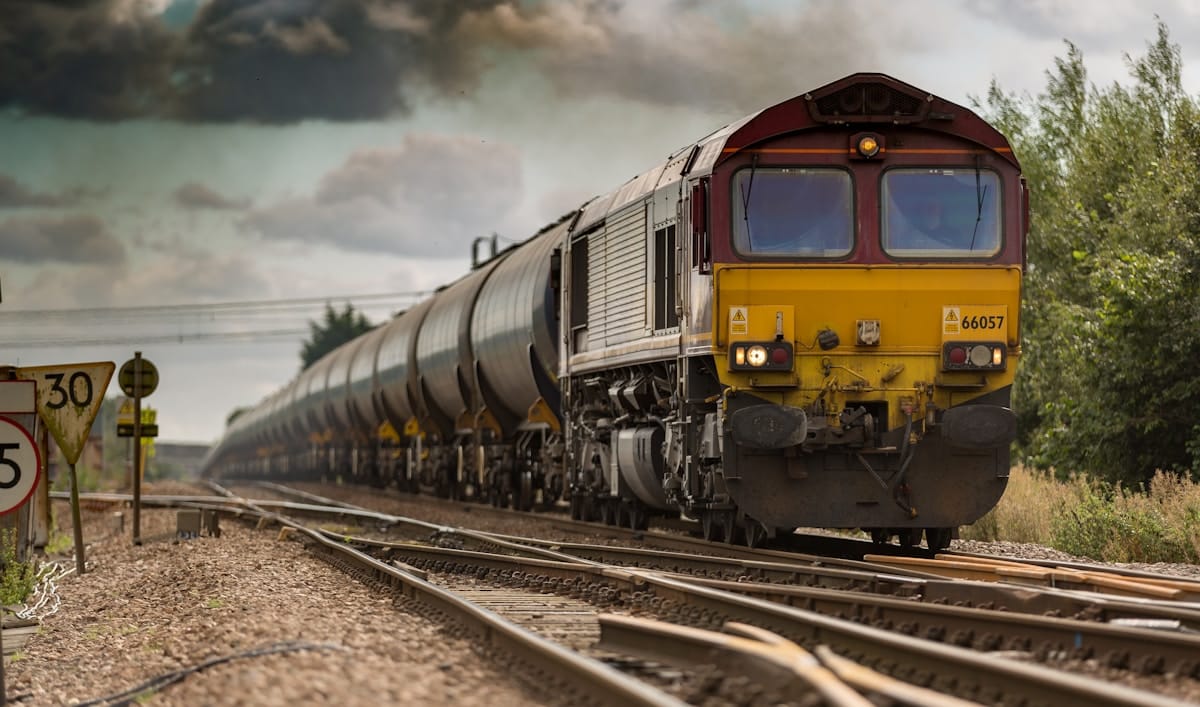
Comboios de Portugal — the State-owned operator that runs every passenger train inside the country bar the Fertagus and Metro do Porto franchises — closed 2025 with a net profit of €4.8 million, up from €1.8 million the year before. The 166% jump, disclosed in the company's 2025 accounts and reported by Público on Wednesday, lands on the back of a record passenger volume: 208 million journeys across the network, a 10% rise on 2024 and the highest figure since CP was reorganised in 2003.
The headline number is small in absolute terms — €4.8 million is what a mid-sized Lisbon law firm bills in a quarter — but the directional shift matters. CP has spent most of the past decade stuck between operating losses and break-even, and the institutional consequence of crossing into sustained profitability has now arrived.
The €20 Passe Ferroviário Verde Did the Heavy Lifting
CP's own analysis, shared with the Government, attributes most of the demand growth to the Passe Ferroviário Verde, the €20-a-month national rail pass launched in October 2024 as a flat-rate alternative to per-trip ticketing. Since launch the pass has accumulated 780,000 subscriptions and powered more than three million reservations, with the heaviest take-up on Lisbon-Porto Intercidades and Alfa Pendular long-distance trains, the routes where a per-trip fare of €25–€35 makes the €20 monthly cap mathematically irresistible for anyone making more than one round trip.
The pass is not without strain on the network. Long-distance reservations are now routinely sold out three to five days ahead on Friday afternoons and Sunday evenings; CP has had to add carriages on several Alfa rotations and is leasing additional rolling stock from Renfe through the Iberian operator's surplus fleet. Capacity expansion is the main brake on a third year of similar growth in 2026.
INE Pulls CP Out of the General Government Register
Alongside the financial release, the National Statistics Institute updated the general government institutional sector register and removed CP from the list of public-sector entities. Under European System of Accounts (ESA 2010) rules, a State-owned company is classified inside the general government sector if it fails the market-producer test — broadly, if commercial sales cover less than half of operating costs. CP has now passed that test for two consecutive years.
The reclassification is administrative, but the operational consequence is significant. From 1 January 2027, CP will move out of the Código dos Contratos Públicos's strictest procurement regime — the one that applies to government departments, hospitals and municipalities — and into the lighter regime applicable to public enterprises. Procurement of rolling stock, signalling, and IT can be tendered faster, with shorter publication windows and broader use of negotiated procedures. The company will also gain autonomy over its own salary scale and hiring decisions, both currently constrained by the State Budget law's annual ceilings.
What This Means for Expats
- The €20 Passe is here to stay — and may stretch. CP's profitability removes the political argument for unwinding the discount. The likeliest 2026 evolution is the addition of region-only and senior tiers rather than a price hike.
- Reservations matter more than ever. Foreign residents using long-distance trains for cross-country trips should now book three to five days out, not the same morning. CP's Linha Verde commuter trains around Lisbon and Porto remain reservation-free.
- Capacity is the constraint. The reclassification accelerates rolling-stock procurement, but new trains take three to four years to deliver. Crowded weekends will likely persist into 2027.
- The state-owned operator is now profitable, not subsidised. That changes the politics. Future rail strikes — and the labour conflict over the proposed suburban subconcession that CP's own president has spoken against — sit on a different financial backdrop than the loss-making years would have offered.
- Procurement reform unlocks new tech. The 2027 autonomy gives CP latitude to push faster on contactless ticketing, integrated app payment and station-side commercial rents — features long held back by the procurement regime that exits the company at year-end 2026.