Council of Ministers Triggers Third Stage of TAP Sale — PARPUBLICA Now Has the Green Light to Ask Lufthansa and Air France-KLM for Binding Bids by End of July
The Council of Ministers on 23 April authorised PARPÚBLICA to invite Air France-KLM and Lufthansa to submit binding offers for 44.9% of TAP. Pinto Luz wants invitations out by end of April, binding bids by end of July, and the privatisation closed by early September.
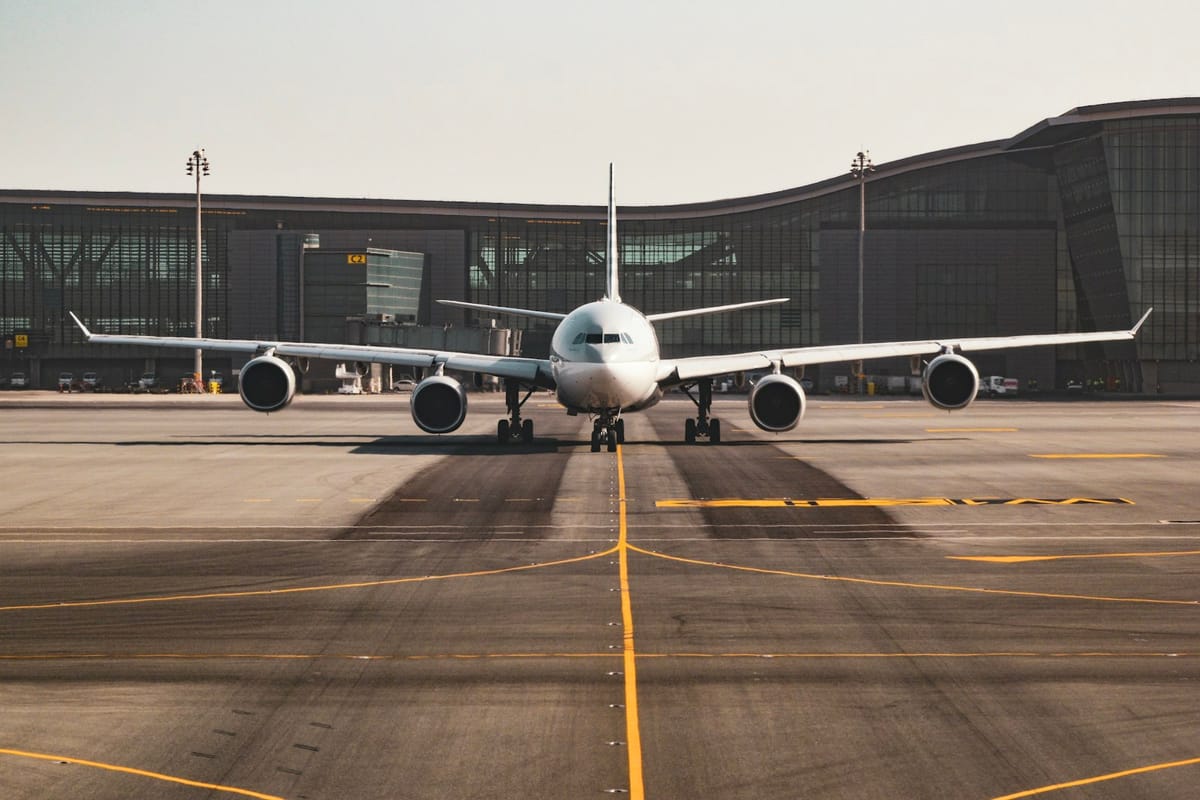
The TAP privatisation has moved into the stage that decides who actually buys the airline. Meeting at São Bento on Wednesday, 23 April 2026, the Council of Ministers approved the resolution authorising PARPÚBLICA — Participações Públicas (SGPS), S.A. to formally invite Air France-KLM and Lufthansa Group to the third stage of the procedure: the submission of propostas vinculativas — binding offers — for a 44.9 per cent stake in TAP — Transportes Aéreos Portugueses, S.A.
The decision, listed first in the Wednesday comunicado of the Conselho de Ministros, ends the non-binding phase that began on 2 April 2026 when both groups submitted their initial offers and triggers the eight- to ten-week window in which Lisbon will receive a final price, a final industrial plan and final commitments on jobs, hub configuration and route maintenance from each carrier. On the timeline communicated to the bidders this week, Infrastructure Minister Miguel Pinto Luz wants the formal invitations out before the end of April, the binding bids in by the end of July, and the privatisation closed by early September — in time for the 2026/27 winter schedule and ahead of the 2027 Outlook investor calendar.
What Wednesday Actually Authorised
Strictly speaking, the resolution does not pick a winner. It does three things, each of them procedural but each of them load-bearing.
- It authorises PARPÚBLICA, the State holding company that controls the public stake in TAP through TAP, SGPS, S.A., to convidar os proponentes Air France-KLM e Lufthansa a participar in the third phase of the privatisation under the rules approved by the Council of Ministers on 16 January 2026.
- It defines the scope of the binding-proposal request: the divestment of up to 44.9 per cent of TAP's share capital, with the State retaining 50.1 per cent and a series of direitos especiais (the so-called Portuguese golden-share equivalent) protecting the Lisbon hub, the strategic management decisions and the workforce floor.
- It opens the procedural door for Pinto Luz, the Finance Ministry and PARPÚBLICA's executive committee to receive sealed bids, run a comparative evaluation, and submit a final recommendation back to the Council of Ministers.
The resolution does not, by itself, authorise sale. The Council will have to take a second decision, after the binding bids land, to choose a buyer and authorise PARPÚBLICA to sign the share-transfer agreement.
Where the Process Stands
The current chronology, condensed:
- 16 January 2026 — Council of Ministers approves Decreto-Lei 5/2026, the legal framework for TAP's reprivatisation, set at up to 49.9 per cent of capital, with at least 5 per cent reserved for employees and the remainder open to a strategic investor.
- 4 March 2026 — PARPÚBLICA opens the first stage with the publication of the aviso de selecção in the Diário da República.
- 26 March 2026 — Three pre-qualified groups invited to the data room: Lufthansa, Air France-KLM and IAG (parent of British Airways and Iberia).
- 2 April 2026 — Lufthansa and Air France-KLM submit non-binding offers. Both groups bid for the 44.9 per cent strategic stake. Pinto Luz characterises both offers as «largamente equivalentes e muito ambiciosas» in strategic, industrial and financial terms.
- 18 April 2026 — IAG formally walks away, citing the limited stake size and Lisbon's restrictions on hub-route consolidation. Two bidders remain.
- 22 April 2026 — SPAC, Portugal's civil-aviation pilots' union, writes to Pinto Luz flagging Lufthansa's idoneidade laboral in the wake of the German carrier's abrupt cancellation of the 2018 VC pilots' agreement during cockpit strikes.
- 23 April 2026 — CJEU Grand Chamber dismisses Lufthansa's appeal on its €6 billion COVID-era recapitalisation, confirming the German State aid breached EU rules. Same day, the Council of Ministers triggers TAP's third stage.
- End-April 2026 (target) — PARPÚBLICA sends the binding-proposal invitation. Period for binding bids opens.
- End-July 2026 (target) — Binding bids submitted.
- August–September 2026 (target) — Bid evaluation, Council of Ministers decision, share-transfer.
What «Largely Equivalent» Actually Looks Like
The two non-binding bids, on what Lisbon has confirmed publicly, share more than they differ. Both groups offered for 44.9 per cent rather than the full 49.9 per cent on the table, leaving the 5 per cent employee allocation untouched. Both committed to keep TAP's brand, livery and Lisbon-Portela hub. Both pledged to protect TAP's medium-haul Brazil and Africa long-haul franchise — the same arguments that have justified Portugal keeping a flag carrier in the first place.
The differences will surface in the binding round. Lufthansa is expected to push hard on hub coordination with Frankfurt, Munich and Zürich (the Group's three existing European long-haul hubs); the Group's industrial plan, on what is publicly known, leans on integrating TAP's Atlantic schedule with the Star Alliance feeder network and rationalising TAP's Atlantic fleet around the Group's existing Airbus A350 / Boeing 787 split. Air France-KLM is expected to push the SkyTeam and Air France-KLM Cargo angle, plus the Atlantic-Joint-Venture with Delta, and to lean on the proximity of Paris-CDG as a complementary rather than competing long-haul hub. Both bidders will be asked, in the binding phase, to commit to specific minimum frequencies on Lisbon-Brazil and Lisbon-Africa routes — the routes Lisbon does not want diluted into a German or French hub.
The Two-Bidder Headache
Lisbon's challenge in the binding round is structural: a two-bidder auction is not, by competition-policy standards, a competitive process. With IAG out and no third European group at the table, PARPÚBLICA's evaluation team has limited leverage to drive the headline price up. Pinto Luz acknowledged this on Wednesday by stressing that the competition will be on industrial commitments rather than on price — a framing that, in practice, gives the State the right to weigh non-financial criteria heavily in the final scoring.
The non-financial criteria will matter. SPAC's 22 April letter to the Minister flagged Lufthansa's idoneidade laboral — the union argument that the Group's track record on industrial relations should be a binding-stage scoring factor. The CJEU's 23 April ruling against Lufthansa's COVID bailout adds a second pressure point, raising the question of whether the German Group will be required to repay all or part of the €6 billion in State aid in the year it is also writing a several-billion-euro cheque for TAP. Air France-KLM's own COVID State-aid file remains pending; a separate CJEU ruling on the French recapitalisation is expected later this year.
The Workforce Slot
The 5 per cent employee allocation set aside in Decreto-Lei 5/2026 has its own track. PARPÚBLICA will need to design the subscription mechanism — whether a free allocation, a discounted share offering, or a phantom-equity scheme — in parallel with the binding phase. The unions (SITAVA, SNPVAC, SPAC, SITEMA) have not yet been formally consulted on the subscription design; an inter-union working group is expected to be convened in May.
What Could Still Derail It
- Bid timing slips. Eight to ten weeks is short for due-diligence on a flag carrier with TAP's complex history (BES, the Atlantic Gateway/Neeleman–Pedro consortium, the COVID recapitalisation, the 2024 IFRS restatement). Either bidder could request an extension.
- Single-bidder collapse. If either Lufthansa or Air France-KLM withdraws between now and end-July (citing the CJEU ruling, a labour-relations issue, or pricing), the procedure collapses to a single-bidder round. PARPÚBLICA's evaluation team would then face the harder choice between a directly-negotiated sale and a re-launch — the latter potentially triggering a fresh political cycle around the hub commitments.
- EU State aid review. The Commission has not yet pre-cleared the privatisation. A Commission objection on, say, the workforce allocation, the price-discovery mechanism, or the State's continuing 50.1 per cent could push the September close into Q1 2027.
- Political risk. The Bloco de Esquerda, PCP and Livre have all opposed the 44.9 per cent strategic-stake structure on the floor of the Assembleia da República. None of them can block the sale — the Council of Ministers' resolution is administratively self-executing under the framework law — but a parliamentary motion of censure (or a hostile inquérito parlamentar) could disrupt the Q3 timeline.
For Expat Travellers, Workers and Investors
For travellers who fly TAP regularly — the London-Lisbon-Faro corridor, the New York/Newark-Lisbon route, the Brazil long-haul network — nothing changes immediately. Both bidders have publicly committed to protect TAP's brand, livery and route network through the integration period. The frequency floor for Brazil and Africa, on what Lisbon has signalled, will be hard-coded into the binding round. Star Alliance miles (Lufthansa scenario) and SkyTeam miles (Air France-KLM scenario) are the longer-run question for frequent flyers; nothing changes pre-close.
For TAP's roughly 7,500 employees in Portugal, the 5 per cent employee allocation is the explicit defensive layer. The longer-run risk is on cabin-crew and ground-handling rationalisation as the Group integrates TAP into its existing operations — SPAC's labour-suitability concerns are the unions' counter on that risk, with the binding-phase scoring as the leverage point.
For expats who have invested in Portuguese aerospace suppliers (the Embraer-related cluster in Alverca, OGMA, the Sines cluster, the cargo-belly handlers at Lisbon-Portela and Porto), the buyer choice will determine the maintenance, supply and cargo flow into the integrated network. A Lufthansa win pulls TAP's MRO closer to the Lufthansa Technik footprint; an Air France-KLM win pulls maintenance toward Air France Industries / KLM E&M. Either way, decisions on the next-generation TAP fleet (the Airbus A321XLR firm-order question, the A350-1000 option round, the cargo-strategy review) move from Lisbon to a co-decision with the Group's central planning function.
For Portuguese-resident retail investors, the privatisation does not include a public retail tranche. The 44.9 per cent goes to a single strategic investor; the 5 per cent goes to TAP employees; the 50.1 per cent stays with the State. There is no IPO leg to subscribe to.
What to Watch Between Now and September
- The text of PARPÚBLICA's binding-proposal invitation, expected by 30 April, which will publish the precise scoring grid and the binding-bid deadline.
- SPAC, SNPVAC and SITAVA position papers on the labour-suitability question, expected through May and June.
- The European Commission's response to Portugal's notification of the privatisation under the State-aid rules.
- The CJEU ruling on the parallel Air France-KLM COVID recapitalisation, expected in Q3 2026.
- The Council of Ministers session that will take the final award decision — on the current timeline, late August or first week of September.
The Council of Ministers' Wednesday resolution does not finish the TAP sale. It starts the period in which it can finally be finished. From end-April, the clock that has been ticking for thirteen months — since the Government tabled the original framework law in March 2025 — finally has a stop date. On the airport-border-control-and-EES rail, our 16 May 2026 read on the Humberto Delgado departures border-control IT failure that pushed waits past 60 minutes for non-Schengen passengers — six weeks into the EU EES 100% rollout and eight days after Ryanair's September-suspension demand sets the latest reference. On the regional-aviation reprivatisation rail, our 21 May SATA Internacional / Azores Airlines read — the regional caderno de encargos that opens the private-negotiation phase with a 75% minimum-stake floor, a 30-month bar on collective dismissals, a three-year AOC commitment, an HQ-in-Açores requirement and a binding list of São Miguel-Terceira-Lisboa-Porto-US-Canada routes, under independent supervisor Augusto Mateus sets the latest reference. On the EES border-throughput file, our 27 May read on ACI Europe's 45-airport survey pegging Schengen Entry/Exit System border waits at up to 3.5 hours and a 70% processing-time lift, with Henna Virkkunen offering Brussels support to Portugal and DECO mounting a passenger-compensation push for delays at Humberto Delgado, Sá Carneiro and Gago Coutinho sets the latest reference. On the SATA Group, Atlantic aviation and Azores inter-island connectivity side of the file, our 5 June read on SATA Air Açores chartering a 78-seat Bombardier Dash Q400 from Maltese operator Luxwing for the 15 June – 15 August 2026 summer surge — ACMI wet lease covers the inter-island grid after a delayed Bombardier OEM delivery of the carrier's new DH4 leaves a peak-season capacity gap and protects the SATA Internacional connecting tape feeding the Boston, Toronto, Frankfurt and Amsterdam corridors sets the latest reference. On the Lisbon-airport capacity, aviation-infrastructure and APA-licensing side of the file, our 7 June read on ANA filing the Estudo de Impacto Ambiental with APA for the Humberto Delgado capacity stretch from 38 to 40 movements per hour, works pencilled to start in early 2027, a second EIA to 42 movements already queued and the broader expansion sitting in parallel — not sequence — with the €8.5 billion Alcochete Aeroporto Luís de Camões greenfield sets the latest reference. On the EU261, air passenger rights, Regulation 261/2004 revision, TAP / Ryanair / easyJet, ANAC, cabin-baggage rule and EU Parliament-Council trilogue side of the file, our 16 June read on Brussels inking the EU261 air passenger rights overhaul after 12 years of deadlock — the €250/€400/€600 compensation grid holds at the 3-hour threshold, cabin-baggage carve-out, 96-hour claim window and the mid-2027 applicability timeline reshape the TAP / Ryanair / easyJet operating read sets the latest reference. On the TAP, aviation and Lisbon-airport side of the file, our read on the TAP sale narrowing to Air France-KLM and Lufthansa ahead of July's binding bids sets the latest reference. On the Azores air-connectivity and travel side of the file, Austrian Airlines' new Vienna–Ponta Delgada link sets the latest reference. On the aviation-and-climate side of the ledger, Portugal's €2 carbon charge on air travel has quietly raised more than €266 million for the Environmental Fund since 2021.