Cascais's 'Free Lunch' Walks Into Porto and Viseu — Pedro Duarte Locks a €20.5 Million Free-Transit Contract for 1 July, Viseu Approves a €1 Million Universal Pass on 8 May and the Tribunal de Contas Becomes the Last Gate
Porto signs a €20.5M/year free-transit contract for residents across the entire AMP, targeting 1 July activation pending Tribunal de Contas visto. Viseu adds a €1M universal pass on 8 May. The Cascais Viver model is going national, one Câmara at a time.
The Cascais experiment has stopped being a municipal eccentricity. Within seven days the Câmara do Porto signed a €20.5-million-a-year free-transit contract with Transportes Metropolitanos do Porto for residents across the entire metropolitan area, and the Câmara de Viseu approved a €1 million universal pass that extends an existing youth, senior and veteran benefit to every resident of the district capital. Both decisions now sit in the Tribunal de Contas queue — the visto from Praça do Comércio is the last operational gate between the political announcements and the activation date.
The Porto file is the heavier one. Mayor Pedro Duarte, elected 12 October 2025 on a free-transit pledge, ran the Assembleia Municipal vote on the night of 4 May and tied the contract's financial and operational effects to 1 July 2026 — or the date of the Tribunal de Contas visto, whichever is later. The geographic footprint is the full Área Metropolitana do Porto: Oliveira de Azeméis to Póvoa de Varzim, Gaia to Paredes and Arouca. The funding line is the taxa turística — Porto raised tourist-tax receipts to €2.50 per overnight stay in January 2026 and earmarked the incremental yield to the transit contract. The technical bottleneck is residence verification: the contract requires a passenger-counting layer that lets the Câmara reconcile per-trip municipal subsidies with the metropolitan transit authority, which is the part Duarte has flagged publicly as the project's actual engineering risk.
Viseu's vote on Thursday 8 May extended the city's existing free pass — which already covered residents under 23, over 65 and antigos combatentes — to every resident regardless of age. The annual envelope is €1 million, funded out of the city's general budget. The political move is the opposite of Porto's: Viseu has no large metropolitan-area scaffold and no tourism-tax pipe, so the city is taking the cost onto its own balance sheet and locking universal coverage as a flat budget line.
Cascais remains the comparator both projects are measured against. The Viver Cascais card launched in 2020, was funded out of parking-fee receipts and IUC redirection, and pushed monthly ridership from ~19,000 in 2018–2019 to ~50,000 in 2024 — a 163% jump that drove the Porto and Viseu pitch decks. The national parallel is the youth Passe Sub-23, launched in 2024 at €158 million annually and now covering every resident under 23 in the region where they live, work or study. The combined effect is that Portugal is running four parallel free-transit regimes in 2026 — Cascais municipal, Porto AMP, Viseu municipal and national Sub-23 — without a unifying legal framework.
The Tribunal de Contas filter is the structural risk. The court rejected three municipal free-transit packages between 2022 and 2024 on financial-sustainability grounds, sending two of them back for cost-coverage amendments. Porto's contract is the largest in absolute value the court has assessed since the Cascais model, and the tourism-tax-funded structure is a novel financing scaffold inside Portuguese local-government law. A negative visto would push activation past the political 1 July target, but the contract is calibrated to absorb that delay without operational rupture.
What This Means for Expats
- Residence registration matters more in Porto: The Porto contract benefits residents only, with eligibility verified through the metropolitan transit infrastructure. Expats living in Porto with foreign-address registrations will need to ensure their atestado de residência is current to claim the benefit when activation lands.
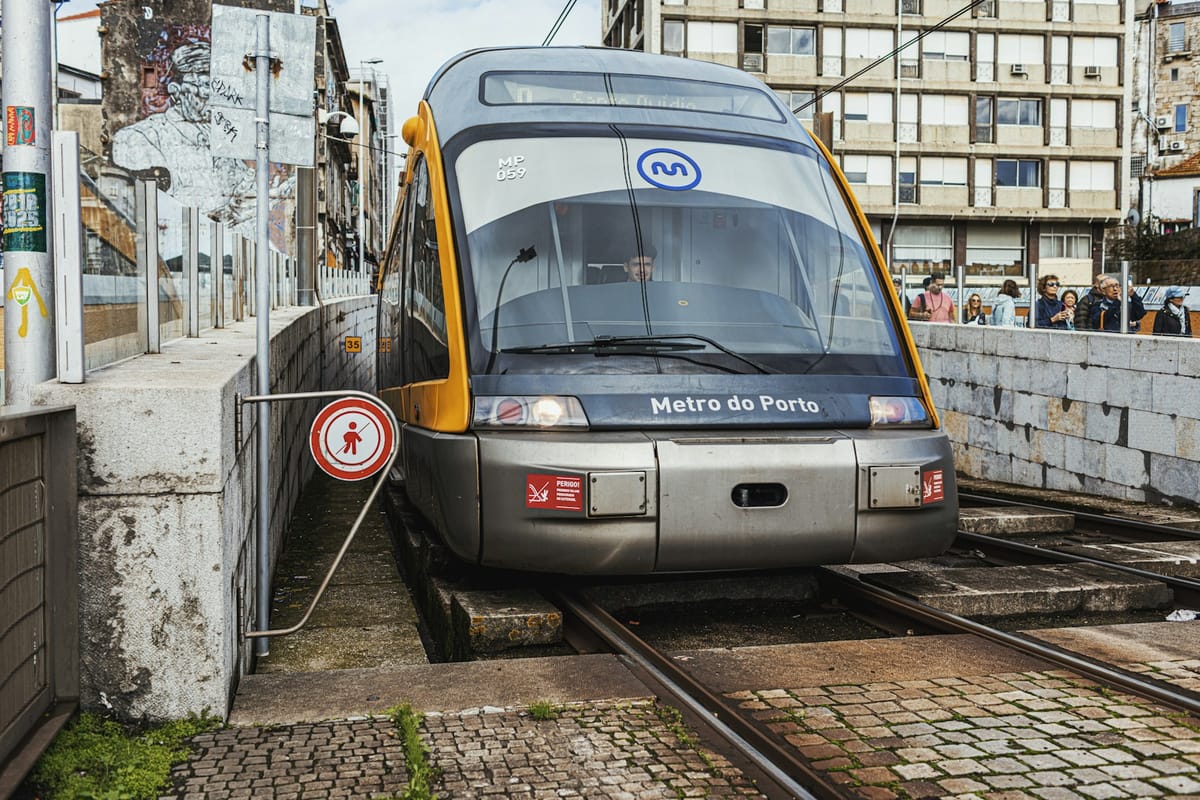
- The metro and bus network are both inside the deal: The Porto AMP envelope covers Metro do Porto, STCP buses, suburban CP trains within the AMP perimeter, and the Funicular dos Guindais — all on a single municipal-card layer. Tourists pay the regular fares.
- Cascais and Lisbon remain different regimes: The Viver Cascais card is municipal and does not extend to Lisbon-area Carris/Metro Lisboa. Carris Metropolitana fares for non-Cascais residents in the AML continue under the Passe Metropolitano structure.
- Viseu is universal but limited: The €1 million envelope covers a smaller geographic footprint than Porto's, but the eligibility is universal — there's no age, employment or veteran filter beyond residence in the city. Useful for expats who have settled in the interior.
- Plan around the Tribunal de Contas timeline: Porto's 1 July date is a target, not a guarantee. The court typically takes 90 to 180 days to issue a visto on contracts of this scale, so a Q3 2026 activation is the realistic window.
The structural question for 2027 is whether the four parallel regimes converge into a national free-transit framework or stay as competing municipal-and-metropolitan experiments. The Concertação Social table has not raised transit policy in its current cycle, and the Ministério das Infraestruturas has not signalled a unifying instrument. For now, the most consequential change in urban-mobility access in Portugal since the 1990s is happening at the municipal level, one Câmara at a time. On the Porto municipal side of the file, the court freeze on the Mercado do Bolhão stall auction sets out the popular action a traders' association filed on 30 July, what admitting a providência cautelar actually suspends, and the July auction in which a fish stall with a €343.80 base went for €7,550 a month.