Brasília's ANP Approves Galp's Berbigão and Sururu Unitization Agreements Eight Years After Submission — The Portuguese Producer Settles at 6.45% in Berbigão and 9.497% in Sururu of the Pre-Sal Block BM-S-11A That Has Been Pumping Since 2019
Brazil's Agência Nacional do Petróleo cleared Galp's eight-year-pending unitization for Berbigão and Sururu on 4 May 2026. Galp's stake settles at 6.45% / 9.497% — and the Lisbon producer says financials already book the change since Q3 2022.
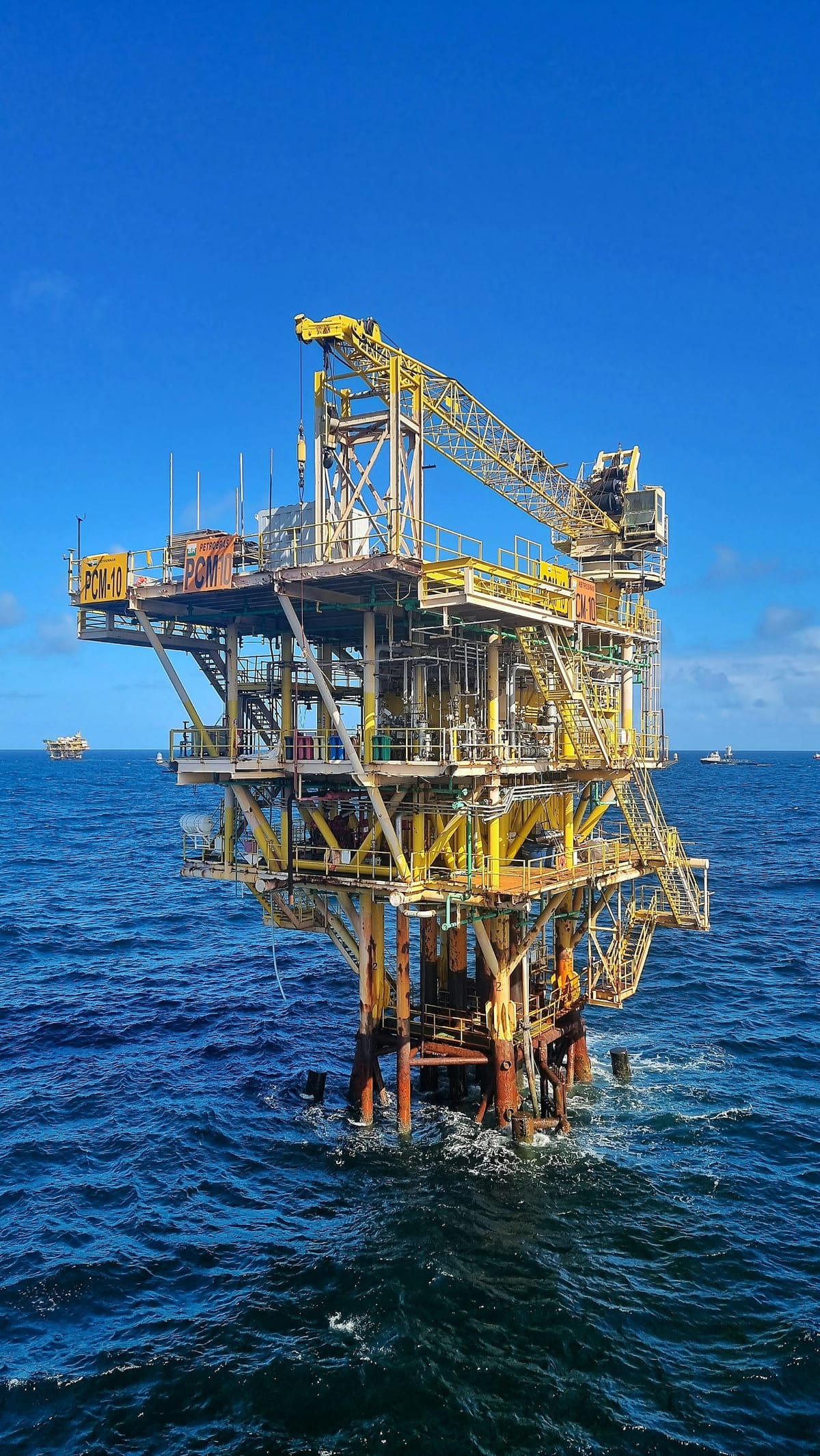
Brazil's Agência Nacional do Petróleo, Gás Natural e Biocombustíveis (ANP) approved on Monday 4 May 2026 the long-pending unitization agreements covering the Berbigão and Sururu accumulations in the pre-sal Santos Basin — eight years after the consortium submitted the joint development plan to the regulator alongside Petrobras in 2018. Galp Energia disclosed the approval in a market notice filed with the Comissão do Mercado de Valores Mobiliários on Monday afternoon and confirmed that the unitization has now finally formalised the working-interest split that the producer has been booking on a provisional basis in its financial statements since Q3 2022.
The Numbers
Galp's exposure to the two accumulations sits inside the consortium that holds block BM-S-11A, in which the Lisbon producer has a 10% participating interest. The unitization re-allocates that 10% block-level stake into accumulation-specific stakes that reflect the share of each reservoir falling inside BM-S-11A versus the neighbouring blocks operated by Petrobras and the consortium partners.
On approval Galp's working interest settles at:
- Berbigão: 6.450% of the unitized accumulation
- Sururu: 9.497% of the unitized accumulation
Both fields entered production in 2019 and have been pumping at near-peak rates through the FPSO P-68 (Berbigão) and FPSO P-70 (Sururu) production vessels. The two accumulations contribute roughly 14,000-16,000 barrels of oil equivalent per day to Galp's working-interest production, around 7% of the group's total upstream output and a steady contributor to the upstream cash-flow line that has been carrying the EBITDA bridge through the post-2024 Brent compression.
Why It Took Eight Years
The Berbigão / Sururu unitization sat in the ANP's queue for eight years for a combination of regulatory and commercial reasons. The agreements had to clear the technical sub-volumetric study (the calculation of how much of each reservoir's resource sits beneath BM-S-11A versus the neighbouring blocks), the commercial negotiation between the Petrobras-led BM-S-11 / Iara consortium and the BM-S-11A consortium on retroactive cost recovery for capital expenditure already incurred, and the ANP's own internal-review queue that has been compressed by the volume of pre-sal-era unitizations submitted in the same 2017-2019 window. The 2024-2026 ANP backlog clearance window has now resolved most of the legacy submissions in this bracket, and the Berbigão / Sururu approval is one of the larger residual files to clear.
The Financial Booking
Galp's filing reiterates that no adjustments are foreseen in its financial statements, because the working-interest stakes that the ANP has now formally approved have been the basis for the company's revenue recognition since Q3 2022. The change is therefore an accounting and regulatory de-risking event rather than a P&L event. The market notice does, however, flag that further negotiations between the partners on retroactive capital expenditure incurred during the 2019-2026 production window are still pending — meaning a small reconciliation adjustment may flow through Galp's investing-activities line in a future quarter, depending on whether the partners agree on Galp's share of historical capex versus the de facto split that has applied operationally since the FPSO start-up. The company has not quantified the residual.
Setting the Galp Pre-Sal Stack in Context
Berbigão / Sururu sits inside Galp's larger Brazilian pre-sal portfolio, which also includes its working-interest exposure to the giant Tupi field (10% block-level stake in BM-S-11), Iara (Berbigão / Sururu / Atapu cluster), Carcará / Bacalhau (40% operatorship via Equinor partnership) and the more recent Bumerangue exploration block awarded to Galp in 2023. The pre-sal corpus contributes roughly two-thirds of the producer's total reserves and the equivalent share of the upstream EBITDA — the Bacalhau project, slated for first oil in late 2026 / early 2027, is the largest pending capex commitment on the upstream books, with Galp's working-interest share of the FPSO Bacalhau-Lara development running to roughly $2.4 billion across the production phase.
For Lisbon shareholders the read is that Brazil's pre-sal regulatory machinery, which had been a perpetual question mark on portfolio reporting through the Bolsonaro and early-Lula administrations, has now broadly cleared its working-interest backlog. The Berbigão / Sururu file was the largest of the legacy residuals, and its closure aligns Galp's reported and audited stakes with the post-2022 statutory accounts.
For Foreign Residents
Three reads. First — Galp's pre-sal exposure underpins the dividend yield that has anchored the stock at the defensive end of the PSI 20 since 2023. The Berbigão / Sururu de-risking does not change the dividend trajectory but does remove a residual regulatory question that defensive-equity holders had been treating as a small but non-zero portfolio risk. The 2026 forward dividend on Galp consensus runs roughly €0.66 per share, against a roughly €15.2 share price — a 4.3% gross yield that compares well with the PSI 20 average around 3.8%. Foreign residents holding Galp through a Portuguese broker (Banco Best, BiG, Activobank, ActivoTrade or the institutional brokers) collect the dividend net of 28% withholding tax under the standard regime, with the withholding refundable through the IRS Modelo 3 anexo J for resident filers. Second — for foreign residents holding Galp through a non-Portuguese broker (an Interactive Brokers Ireland account, Trade Republic, Degiro), the dividend reaches them after the Portuguese withholding plus, in some cases, the broker-domicile second-layer withholding. The double-tax treaty between Portugal and Ireland zeros out the second layer, but Trade Republic German-domicile and Degiro Dutch-domicile customers should check their broker's standing-instruction tax documentation. Third — Galp's pre-sal-heavy upstream portfolio is the natural Brazilian-currency hedge inside the PSI 20 stack. For foreign residents holding income-producing assets denominated in BRL (Brazilian-listed REITs, fixed-income, family-owned property), Galp's earnings translation through the BRL/EUR pair offers a partial offset that is not available through any other PSI 20 name — the closest analogue is Jerónimo Martins through its Hipermercados Pingo Doce/Recheio Polish exposure, but the BRL angle is unique to Galp.
The next read on Galp upstream is the second-quarter trading-statement release, scheduled for late July 2026, which will report production figures inclusive of the now-formalised Berbigão / Sururu split. The unitization closure removes the residual footnote that has carried in Galp's quarterly disclosures since 2022. On the tax front, the Tax Authority's overcharge on long-held foreign shares left many foreign-investment filers with IRS bills that are now being corrected.