Braga's Casais and Spain's ACR Launch CREE Iberia, a 50/50 Venture in Industrialised Construction
Grupo Casais of Braga and Spain's ACR have created CREE Iberia, a 50/50 company to build with prefabricated timber-and-concrete systems across the Iberian Peninsula. It targets hotels, student and senior housing and 'flex living', betting factory-made construction can beat the building site.
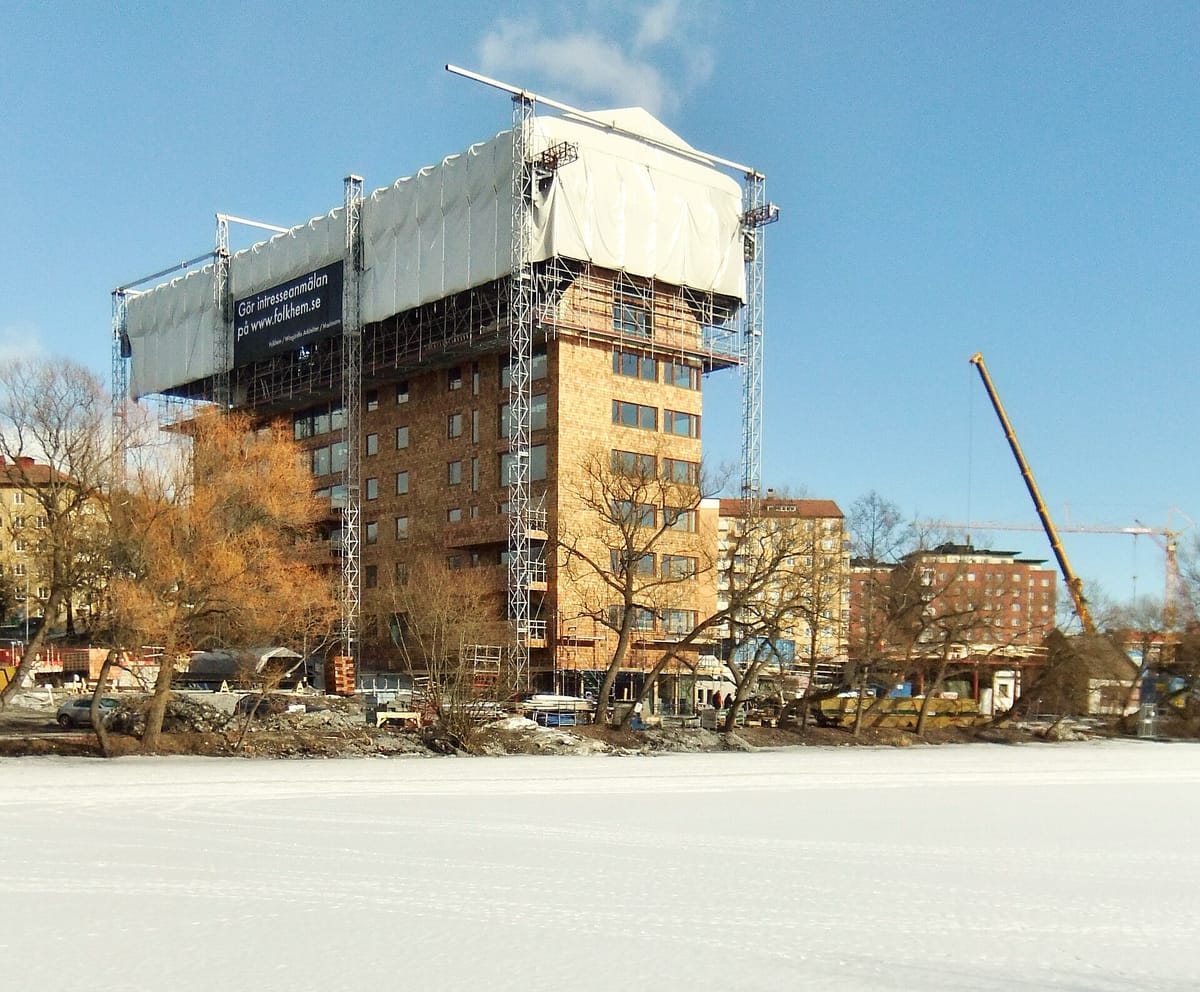
One of Portugal's largest builders is pushing into factory-made construction alongside a Spanish specialist. Grupo Casais, the Braga-based group, and ACR of Spain have created a jointly-owned company, CREE Iberia, to build with industrialised, prefabricated systems across the Iberian Peninsula — a bet that the future of construction lies less on the muddy building site and more on the assembly line.
A 50/50 venture
CREE Iberia is owned equally by the two partners. Its core asset is an exclusive licence to deploy the CREE Buildings hybrid system — a construction method combining prefabricated timber, concrete and standardised components — throughout Portugal and Spain. The idea is to manufacture the bulk of a building's structure in controlled conditions and assemble it rapidly on site, cutting the time, waste and unpredictability that dog conventional building.
The two sides bring complementary strengths. Grupo Casais is among Portugal's five biggest construction operators, with 2025 revenue of €1.018 billion — €550 million at home and €468 million abroad — and a long reach into international markets. ACR is a Spanish specialist in industrialised building, operating across Madrid, Navarra, Castile-León, the Basque Country and Aragón with more than 320 employees. It has already delivered some 2,000 industrialised residential units and more than 20 CREE Buildings projects in Spain, among them the B&B Hotel in Tres Cantos, near Madrid, which the partners cite as a reference for what the venture can do.
Where the demand is
CREE Iberia is aiming squarely at the segments where speed and repeatable design matter most: hotels, student residences, senior living, mainstream housing and the fast-growing "flex living" market. These are building types with standardised layouts and impatient investors, exactly the conditions in which modular construction tends to beat traditional methods on cost and delivery time.
The strategic pitch is about fixing what the industry itself acknowledges is broken. António Carlos Rodrigues, chief executive of Grupo Casais, framed it around a familiar set of complaints: construction, he said, "needs more predictable, collaborative systems with lower environmental impact." Michel Elizalde, ACR's president, cast the tie-up as a way to pool know-how and scale, arguing that partnering "enables shared knowledge, expanded capabilities, and stronger market advancement."
A wager on productivity
Behind the corporate language sits a real problem. Construction is one of the least productive major sectors in both Portugal and Spain, chronically short of skilled labour and slow to adopt new methods. Industrialised building promises to attack all of that at once — shortening timelines, raising quality control, using materials more efficiently and, by leaning on timber, lowering the carbon footprint of a notoriously polluting industry.
Whether the model can scale in Iberia, where clients and regulators are still more comfortable with concrete poured on site, is the open question. But with a well-capitalised Portuguese group and an established Spanish operator putting equal money behind a single platform, CREE Iberia is one of the more serious attempts yet to move a large slice of peninsular construction indoors — and to prove that a building assembled from a kit can compete with one built the old way.