Azores Government Opens a Santa Maria Bypass and Hospital Scanner as the Island Council Presses Seven Demands
As the Azores government inaugurates a new Vila do Porto bypass and a hospital CT scanner on Santa Maria, the island's council hands over a seven-point memorandum of unmet needs, ranking health, transport and education at the top.

On the same day it prepared to cut the ribbon on a new road and a new hospital scanner, the Azores regional government received a pointed reminder of everything that residents of one of its smallest islands feel is still missing. The contrast captures the politics of governing a nine-island archipelago — where showcase projects and unmet demands often arrive together.
A statutory visit to Santa Maria
The Regional Government of the Azores (Governo Regional dos Açores) — the centre-right coalition of PSD, CDS-PP and PPM led by José Manuel Bolieiro — begins a two-day statutory visit (visita estatutária) to Santa Maria, in the archipelago's eastern group, on Monday, 29 June. Under the regional rules, the government must visit each of the nine islands at least once a year.
The programme is built around two inaugurations. At 11:00 on Monday, Bolieiro opens the new Vila do Porto bypass (variante à Vila do Porto), a road project meant to ease access around the island's main town. At 15:00, he inaugurates a new CT scanner (Tomografia Axial Computorizada) at the Santa Maria Island Health Unit (Unidade de Saúde de Ilha) — a concrete upgrade for an island where specialist care often means a flight to São Miguel. The day begins with a 09:00 meeting with the mayor of Vila do Porto, Bárbara Chaves, and ends with a meeting with the local Island Council; a regional cabinet meeting follows on Tuesday.
Seven demands, health first
But the Santa Maria Island Council (Conselho de Ilha), the body that represents local civic interests, used the occasion to hand the visiting government a memorandum setting out seven priorities — deliberately ranked. "The order in which the points are presented reflects, in our view, the priority with which they should be treated," said the council's president, Dulce Resendes.
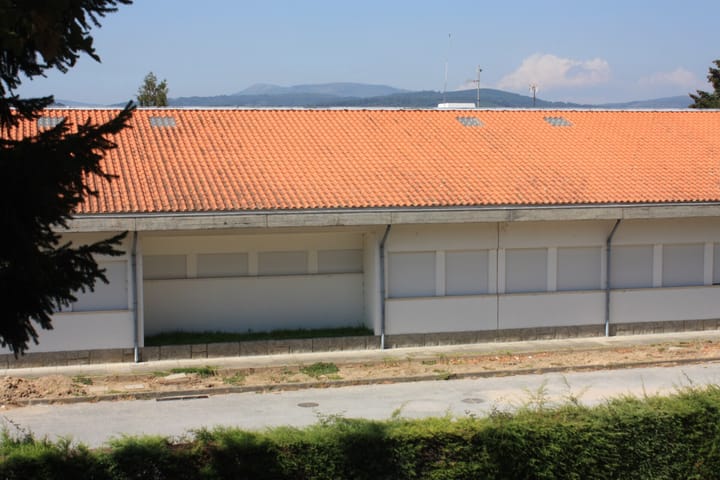
Top of the list is health and the running of the island's health unit — the very service the new scanner is meant to bolster, and a sign that one machine does not settle the island's wider anxieties about access to care. Next come the regional road network and the maritime transport of goods, a long-standing grievance about the cost and reliability of shipping freight between islands. Education ranks fourth, with the council flagging the poor condition of the Vila do Porto Basic and Secondary School (Escola Básica e Secundária de Vila do Porto). Social support for the elderly, housing and coastal management round out the seven.
The bigger picture
For an island of a few thousand residents, the episode is a study in the everyday tension of archipelago governance: an administration arriving with deliverables in hand, and a community insisting that the visible wins not paper over the slower, structural problems of distance, transport and an ageing population. The road and the scanner are real improvements. The memorandum is a reminder that, on Santa Maria, the list of what comes next is already written.