APA Pledges €111 Million to Rebuild a Coast Stripped of 20 Metres by Five Winter Storms — One Million Cubic Metres of Tagus Sand Now Pouring Onto Costa da Caparica Ahead of 1 June
APA is dredging one million cubic metres of sand from the Tagus onto Costa da Caparica between now and June — part of a €111M coastal recovery programme covering damage from Storms Ingrid, Joseph, Kristin, Leonardo and Marta. Some stretches lost 20 metres of beach. Bathing season opens 1 June.
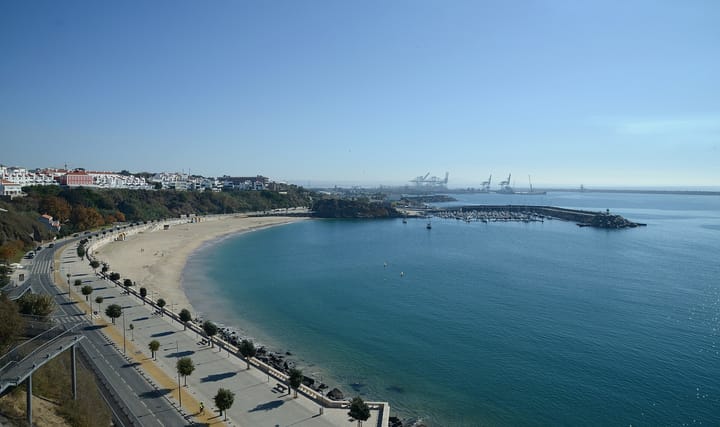
The Agência Portuguesa do Ambiente (APA) is racing the calendar. With the official bathing season opening on 1 June 2026 and roughly five weeks of working time before swimmers return to the sand, dredgers are working full days on the Costa da Caparica coastline south of Lisbon, pumping sand from the bed of the Tagus through long pipes onto a beach that the winter storms hollowed out. The volume budgeted for the Almada stretch alone is one million cubic metres — equivalent, by APA's own arithmetic, to about 100,000 truckloads of material.
The Caparica works are the visible head of a much larger national programme. In a parliamentary briefing on 22 April, APA's leadership laid out a coastal recovery envelope of €111 million for damage between 1 October 2025 and 3 March 2026, while warning the recovery would be "slow and gradual" and that not every beach will be ready by 1 June.
Five Storms, 749 Occurrences
The damage was concentrated in five named systems that crossed the continental coastline between January and February: Ingrid, Joseph, Kristin, Leonardo and Marta. APA logged 749 occurrences producing 571 distinct damage events across 147 locations. Erosion accounted for 36.7% of cases; cliff instability for 30.6%. The municipality most affected was Ovar on the Centro coast, where the Praia do Furadouro lost the better part of its emergent dune system.
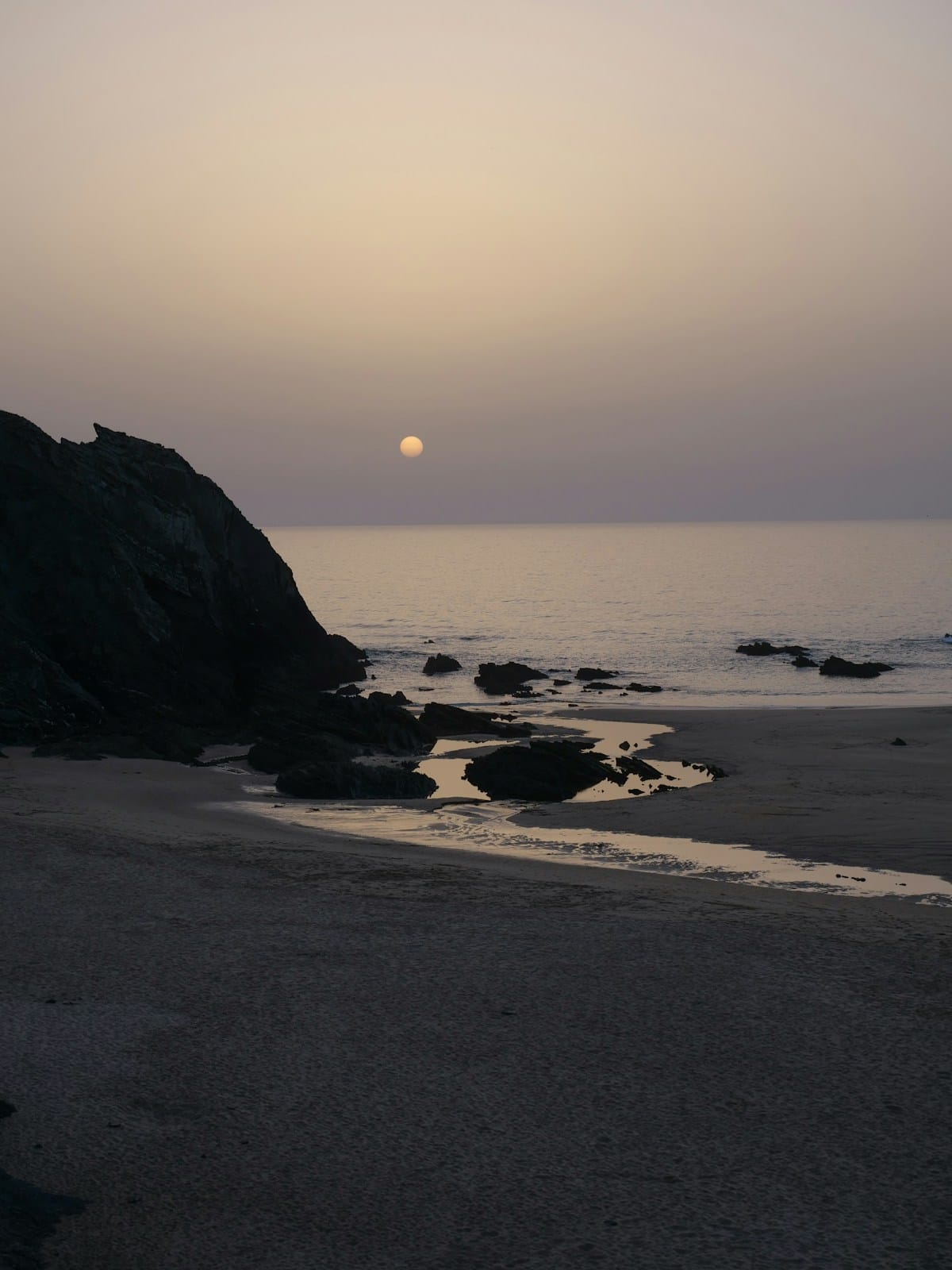
Several stretches recorded a coastal retreat of up to 20 metres from a single winter season. Some of those retreats are recoverable by reposição de areias (sand nourishment); others are structural, meaning they require new groynes, longshore-drift management or hardened revetments — engineering that does not happen between April and June.
Where the Money Is Going
The €111M figure separates into two streams. The first is roughly €84 million APA has already costed for direct repair of storm-related infrastructure, dune reconstruction, and emergency replenishment — including the Caparica programme, the €100,000 rehabilitation of Praia da Galé Fontainhas after a four-metre cota drop, and a €1 million commitment to two Mira beaches confirmed by Minister Maria da Graça Carvalho earlier this month. The second stream is structural coastal-protection work to be programmed across the medium term.
Sand-nourishment campaigns can only physically run between May and June: the dredgers operate under tight environmental conditions, and the works themselves require beach closures while the slurry settles and is bulldozed into profile. APA temporarily interdicted the São João da Caparica stretch through mid-April and parts of Costa de Caparica remain closed to bathers until the Junho deadline.
Why Caparica Is the Showcase
The decision to concentrate volume on the Almada coast is partly political and partly operational. Caparica is Lisbon's beach: tens of thousands of capital residents will move along its concession line during the 2026 summer, and a missing beach is a missing tourism economy. Operationally, the Tagus estuary lies immediately to the north, providing a short, cheap dredging cycle. Sand from the Tagus bed is conveyed by floating pipe to the beach, deposited as a slurry, then bulldozed into a stable profile.
What to Watch
Three pinch points define whether the 1 June target holds. First, weather: a single late-April storm can erase weeks of nourishment. Second, dredger availability — only a small number of vessels in Iberian waters can handle this volume. Third, the structural projects beyond the €84M emergency line — those are the ones that decide whether the 2027 winter exposes a coast that is still as fragile as the one that the 2026 storms found.
Sources: Público reportagem ("O areal das praias portuguesas 'foi comido' pelos temporais", 24 April 2026); Observador ("Tempestades. Recuperação de praias vai custar 84 milhões", 22 April 2026); APA parliamentary briefing materials; Notícias ao Minuto on Ministerial commitments to Mira beaches; Observador on Galé Fontainhas funding (24 April 2026). On the 1 June praia-vigiada beach-safety side, our 31 May read on ISN manning the 1 June Praia-Vigiada surveillance window across the Portuguese coast — credentialed nadadores-salvadores under Portaria 53/2014 deploy through 30 September across the 350-plus praias vigiadas, the bandeira verde-amarela-vermelha-xadrez frame governs swimmer admissibility on a daily readout, and the praias-não-vigiadas perimeter on the Costa Vicentina, Costa Alentejana and the remote Açorean-Madeiran coves carries the structural drowning-severity tail sets the latest reference. On the coastal-environment, beach and marine-pollution side of the file, APA's survey of plastic litter on Portugal's beaches sets the latest reference. On the question of who actually owns the shoreline, what a private owner has to prove before a Portuguese court will accept that a beach is theirs sets out the Herdade da Comenda claim to five Arrábida beaches now before the Setúbal court, the Lei 54/2005 rule that puts sea margins in the public domain and presumes them public in every unproved case, the requirement to show documentary title predating 31 December 1864, and the public-use easement that survives on the land even where a private claim succeeds.